
Nestled high in the breathtaking peaks of the Peruvian Andes, a world of mystery, history, and natural beauty waits. For decades, travelers from across the globe have flocked to South America to walk in the footsteps of the Incas, seeking a connection with a civilization that mastered living in harmony with some of the most rugged terrain on earth. Millions explore the famous stone terraces and temples of the legendary citadel. A smaller, more intrepid group looks upward instead, toward a towering summit that watches over the ancient city.
This is the ultimate guide to Machu Picchu Mountain. Anyone with a passion for adventure travel and a desire to see the world from a higher perspective will find something unlike anything else here. Scaling this mountain isn’t just a physical challenge. It’s a journey through history, an immersion into a unique ecological zone, and a gateway to some of the most spectacular vantage points in the region.
This guide breaks down everything worth knowing to conquer this mighty peak. From securing the right entry passes and understanding trail conditions to preventing altitude sickness and capturing the perfect photograph, everything needed for a safe, rewarding, and memorable ascent shows up below.
Demystifying the Peaks: Understanding the Geography
Before lacing up hiking boots, understanding exactly what’s being conquered matters.
Are Machu Picchu and Machu Picchu Mountain the Same Thing?
A common question among first time visitors goes something like this: are Machu Picchu and Machu Picchu Mountain the same thing? Short answer, no. Planning a successful trip means understanding the difference between the archaeological site and the peak.
Machu Picchu generally refers to the sprawling Inca citadel, the ancient ruins made up of temples, agricultural terraces, and residential quarters built in the 15th century. Anyone curious about when was Machu Picchu built will find that construction is generally dated to around 1450, under the rule of the Inca emperor Pachacutec. That’s the UNESCO World Heritage site that shows up in countless travel magazines. Machu Picchu Mountain, often called Montaña Machu Picchu locally, is something different entirely. It’s the massive, towering peak rising directly behind and above the archaeological site. Hiking this mountain means leaving the ruins behind and climbing the sheer peak that gave the famous city its name, which translates to Old Mountain in the indigenous Quechua language.
What Mountain Range Is Machu Picchu In?
Appreciating the scale of this hike means understanding its geological context first. Travelers frequently ask, what mountain range is Machu Picchu in? The site and its surrounding peaks belong to the Cordillera de Vilcabamba, a striking sub range of the Andes. This specific region sits right at the transition zone between the dry, high altitude Andean highlands and the lush, humid Amazon basin. That geographical sweet spot creates a unique cloud forest environment, full of dramatic drops, sheer granite walls, and swirling mist.
The Great Debate: Huayna Picchu vs. Montaña
Planning an extended hike above the citadel usually means facing a choice between two peaks. Huayna Picchu, the sharp, iconic peak seen in the background of classic citadel photos, and Machu Picchu Mountain, the higher, wider peak at the opposite end of the site. Weighing this comparison carefully matters for making the right call, especially for anyone serious about hiking Machu Picchu beyond just the standard citadel tour.
- Height and elevation: Montaña sits significantly higher. Huayna Picchu tops out at 2,693 meters, or 8,835 feet, while Montaña towers above it, offering a much higher vantage point.
- The trail: Huayna Picchu is famous for its Stairs of Death, narrow, vertigo inducing steps clutching the side of a cliff. Montaña also features thousands of stone steps, but generally offers a wider, less terrifying path. Being taller though, it demands more stamina.
- Crowds: Huayna Picchu is historically the more famous hike, so permits sell out months in advance and the trail can feel crowded. Montaña tends to stay less congested, offering a quieter, more reflective experience.
- The view: Huayna Picchu looks down at the citadel from a relatively close distance. Montaña delivers a sweeping, bird’s eye perspective instead, taking in the ancient ruins, Huayna Picchu, the winding Urubamba River, and the jagged snow capped peaks of the Vilcabamba range in the distance.
For anyone wanting a rigorous workout, fewer crowds, and the highest possible vantage point, Montaña wins clearly.
Trail Specs: Difficulty, Elevation, and Time
Conquering this peak is a serious undertaking that demands respect and preparation, make no mistake. Here’s what actually waits on the trail.
Elevation and Difficulty
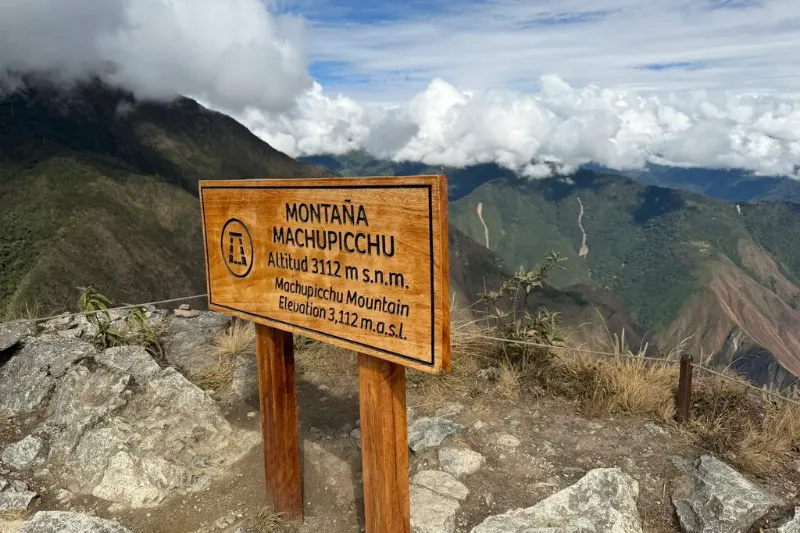
The Machu Picchu Mountain elevation at the summit hits an impressive 3,082 meters, or 10,111 feet, above sea level. Since the trailhead starts inside the citadel at approximately 2,430 meters, or 7,972 feet, hikers face a total elevation gain of roughly 650 meters, or 2,132 feet.
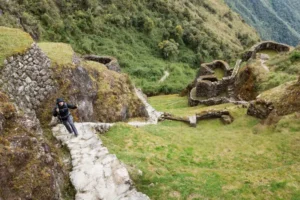
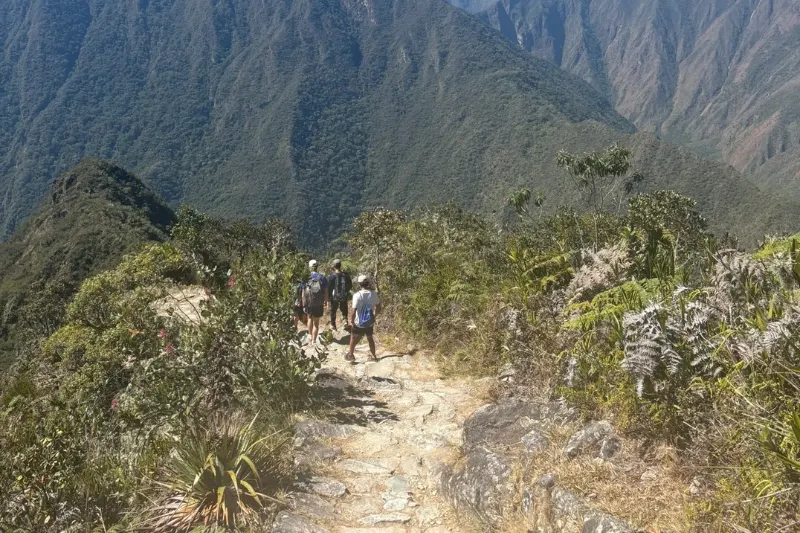
The trail itself is steep and relentless. Stone steps, almost entirely irregular, originally laid by Inca engineers over five centuries ago, make up nearly the whole climb. They’re a marvel of ancient engineering, sure, but these steps vary wildly in height and width. Some are shallow. Others demand high knee drives just to get up. When it rains, these polished stones turn slippery, adding an extra layer of difficulty to the whole climb.
Hiking Times
Because of the continuous incline, pacing matters a lot. Reaching the top observatory usually takes between 1.5 to 2 hours, depending heavily on fitness level and how often someone stops for breaks or photos. The descent back down the same stone path typically takes about 1 hour. Budgeting at least three to three and a half hours for the entire round trip leaves plenty of time to enjoy the summit without feeling rushed.
Ticketing and Logistics: Planning Your Ascent
Nobody just shows up at the ruins and decides to hike the mountain on a whim. Strict daily visitor limits protect the site, making advanced planning an absolute necessity.
Securing the Right Ticket
Accessing this trail requires purchasing a specific machu picchu and mountain ticket. A standard Machu Picchu Ticket that grants entry to the lower ruins alone won’t get anyone past the mountain warden’s checkpoint.
The Peruvian Ministry of Culture frequently updates ticketing circuits to manage crowd flow and preserve the ruins, so paying close attention to the fine print when booking really matters. General visitors touring the classic viewpoints of the lower citadel usually focus on Circuit 1 or 2 entry permits. Those climbing the mountain get issued a combined ticket instead. This ticket dictates specific times for entering the site, when the hike must begin, and the designated route through the ruins both before and after the climb.
Mountain tickets currently link to specific lower circuits, such as Circuit 3, meaning a designated portion of the ancient city gets toured before or after the climb. Verifying the current circuit rules on the official government website at the time of purchase is always worth doing.
The Importance of Early Booking
Booking tickets in advance for mountain treks really can’t be overstated. Daily permits for the mountain stay capped, usually around 400 people per day, split into two morning entry windows. During the dry season, which also happens to be the best season to visit Machu Picchu for clear views, these tickets can sell out weeks or even months ahead. Securing an entry pass as soon as travel dates get finalized just makes sense.
Getting to the Trailhead
The hike technically starts long before anyone hits the stone steps. Getting from Aguas Calientes to the trailhead comes first. Aguas Calientes, also known as Machu Picchu Pueblo, is the bustling town located in the valley below the ruins. Spending a night in Aguas Calientes before visiting Machu Picchu tends to make the whole experience less rushed, since the earliest buses fill up fast. From here, two options exist.
The bus runs a continuous loop up the winding, zig zagging Hiram Bingham Highway, taking about 30 minutes. Lining up very early in the morning, sometimes as early as 4:30 AM, helps catch the first buses up to the gates. Walking works too, hiking from Aguas Calientes up to the citadel entrance, but this steep jungle path takes 1.5 to 2 hours. Anyone planning to hike the mountain afterward should really take the bus up instead, to save leg energy for the main ascent.
Physical Fitness and Preparation
Tackling thousands of ancient stone steps at high altitude tests real endurance. Understanding the physical demands ahead of time helps train effectively.
Training for the Climb
Nobody needs to be an elite marathon runner for this hike, but a solid baseline of cardiovascular fitness and leg strength helps a lot. Preparation should focus on a few things.
- Stair climbing: the best way to train for stairs is to climb stairs. A stair climber machine at the gym, a local stadium, or a tall building all work.
- Cardio endurance: running, cycling, or swimming helps build lung capacity, which matters a lot in thin air.
- Leg strength: lunges, squats, and calf raises prepare the muscles for steep inclines and the impact of the descent.
Surviving the Altitude
The most challenging part of this hike often isn’t the physical incline. It’s the thin mountain air. Knowing how to prepare for high altitude trekking really is the key to a successful trip.
Many travelers underestimate the effects of elevation. Preventing altitude sickness in the Peruvian Andes takes a strategic approach.
- Acclimatization: flying into Cusco, which sits at a staggering 3,399 meters, or 11,152 feet, and attempting the hike the next day just doesn’t work well. Spending at least two to three days acclimatizing in Cusco or the slightly lower Sacred Valley, Ollantaytambo or Urubamba, before heading to Aguas Calientes makes a real difference.
- Hydration: drinking significantly more water than at sea level helps, since dehydration mimics and worsens altitude sickness.
- Local remedies: the indigenous people of the Andes have chewed coca leaves or drunk coca tea for millennia to combat altitude effects. It’s a mild stimulant that aids oxygen absorption and settles the stomach.
- Pacing: walking slowly matters most. The Andean mantra goes poco a poco, little by little. Sprinting up the mountain just forces a stop from the altitude. Listening to the body and resting when the heart rate spikes helps avoid that.
The Ascent: A Journey Through the Cloud Forest
Once past the warden’s hut at the trailhead, the real adventure begins. Climbing Montaña isn’t just a physical climb. It’s practically a masterclass in biodiversity.
Ascending means passing through varying microclimates, surrounded by the wildlife in Machu Picchu and its surrounding cloud forest. The lower sections of the trail stay shaded by dense canopy, offering relief from the Andean sun. The air feels humid here, and the vegetation grows thick. Hundreds of species of wild orchids cling to the trees, alongside giant ferns and bromeliads.
Birdwatchers should keep their eyes peeled and ears open. The cloud forest is home to vibrant hummingbirds, the Andean motmot, and the iconic Cock of the rock. With enough luck, the elusive spectacled bear, the only bear species native to South America, might even show up foraging in the dense foliage just off the trail.
Climbing higher, the trees start to thin out, replaced by resilient alpine grasses and scrub brush. The air grows cooler and crisper, and panoramic views begin opening up all around. With every turn of the zigzagging trail, the citadel below shrinks a little more, offering a new perspective on the vastness of the landscape.
The Summit: Reaching the Observatory
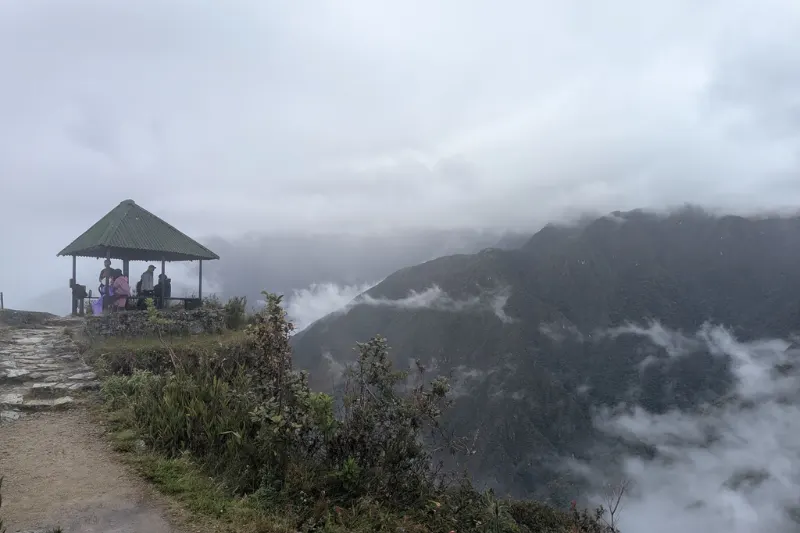
After a grueling hour or two of climbing, the final, steep set of stone stairs gets conquered. The trail flattens out here, arriving at the summit observatory, a small, terraced area marked by a wooden hut, fluttering prayer flags, and a genuine feeling of triumph.
Photography Tips for the Peak
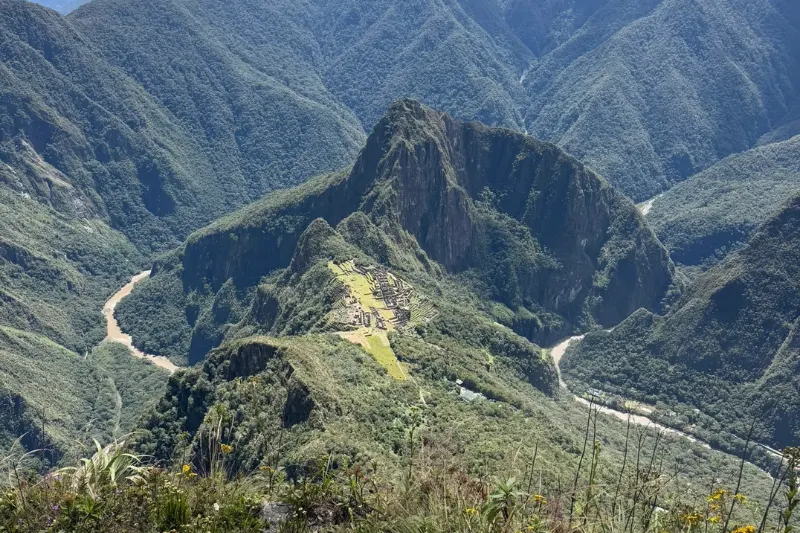
The view from the top ranks among the most spectacular sights in the world, without exaggeration. A breathtaking panoramic view of the Inca citadel ruins unfolds below, looking like a tiny, intricate model from up here. The Urubamba River snakes around the base of the mountains, acting as a natural moat for the sacred city.
Timing matters for capturing this moment properly.
Early morning, between 7:00 AM and 9:00 AM, works well for anyone booking the earliest entry slot, since arriving at the summit while morning mist still burns off can create incredibly atmospheric, moody photos as the ruins play peek a boo through the clouds. There’s a risk of a complete whiteout though, if the clouds stay dense.
Mid morning, between 9:00 AM and 11:00 AM, is generally considered the sweet spot. The mist usually clears by then, leaving crisp, blue skies and excellent lighting that illuminates the citadel below without harsh overhead shadows.
Bringing a polarizing filter for a camera or smartphone genuinely helps too. The high altitude sun can wash out the lush greens of the mountains, and a polarizer cuts through the atmospheric haze, deepens the blue of the sky, and makes the green terraces of the citadel really pop in photos.
The Descent: Proceed With Caution
Reaching the summit is only half the journey. Heading back down the staircase of the Incas demands serious focus. By the time the descent starts, legs are usually tired, and descending irregular stone steps can be incredibly taxing on knees and ankles.
- Take your time: rushing the descent isn’t worth it. Most hiking injuries happen on the way down, when hikers are fatigued and gravity takes over.
- Use trekking poles: this is when trekking poles earn their weight in gold. Note that park authorities require all trekking poles to have rubber tips, to protect the ancient stones. Bare metal tips are strictly prohibited.
- Yield to ascending hikers: stepping aside for hikers struggling up the mountain counts as common hiking etiquette, and it’s safer on narrow stairs too.
Practical Packing List for the Mountain
Transitioning through different microclimates while exerting real physical effort means packing correctly matters a lot. Large backpacks over 20 liters aren’t allowed into the archaeological site, so being strategic with the daypack counts.
- Passport and tickets: the physical or digital machu picchu and mountain ticket, along with an original passport, both get checked at the mountain trailhead. Signing in and out of the logbook is required for safety.
- Water: a minimum of 1.5 to 2 liters per person makes sense. Single use plastic bottles are banned inside the park, so a reusable canteen or CamelBak works better.
- Layers: weather in the Andes stays notoriously unpredictable. It can feel freezing in morning shade, sweltering in midday sun, and pouring rain a few minutes later. Breathable, moisture wicking base layers, a fleece for warmth, and a high quality, packable rain jacket all help.
- Sun protection: at 3,000 meters, the UV index runs incredibly high. SPF 50+ sunscreen, a wide brimmed hat, and polarized sunglasses cover the basics.
- Sturdy footwear: sneakers should stay home. Proper hiking boots or high quality trail running shoes with excellent grip matter for safely navigating the polished stone steps, especially when wet.
- Snacks: eating massive meals gets frowned upon in the ruins, to prevent littering, but keeping a few high energy snacks like protein bars, nuts, or coca candies tucked in a bag helps for a quick energy boost. Packing out every single piece of trash matters just as much.
- Bug repellent: the cloud forest is home to persistent midges and sandflies that leave incredibly itchy bites. A strong insect repellent applied before the hike helps a lot.
The Final Verdict: Is It Worth the Effort?
Sitting in a hotel room in Aguas Calientes afterward, resting tired legs after the hike, looking back on the grueling stair climbs and burning lungs, one question comes up naturally. Is the steep summit climb worth it?
For anyone who loves adventure, nature, and pushing physical limits, the answer is a resounding yes.
Exploring the ancient ruins on the lower terraces offers a profound historical experience on its own. Hiking the mountain elevates the trip from a standard sightseeing tour into a true expedition though. It demands effort, sweat, and determination. In return, the mountain rewards with solitude, an immense sense of personal achievement, and a vantage point that fewer than 10% of all Machu Picchu visitors ever get to see.
Standing at the top observatory, surrounded by the sacred peaks of the Andes with clouds drifting below, understanding exactly why the Incas chose this rugged, dramatic landscape to build their most magnificent city becomes almost automatic. The spirits of the Apus, the mountain gods, feel incredibly close standing 3,082 meters up in the sky.
Conclusion
Embarking on the journey to Machu Picchu Mountain stands as a highlight of any South American adventure. It’s a harmonious blend of historical wonder, extreme geography, and physical challenge. Understanding the booking logistics, preparing the body for the altitude, respecting the ancient trail conditions, and knowing what to expect from the cloud forest environment sets anyone up for an unforgettable experience.
Booking permits well in advance, acclimatizing properly in Cusco or the Sacred Valley, and packing smartly for the unpredictable Andean weather all matter here. Most importantly, tackling the relentless stone steps left behind by a brilliant ancient civilization deserves a pause now and then, just to catch a breath and look around. The journey up the mountain is just as beautiful as the view from the summit. Taking it poco a poco, respecting the mountain, and enjoying every moment of this once in a lifetime adventure above the clouds is really what it’s all about.