
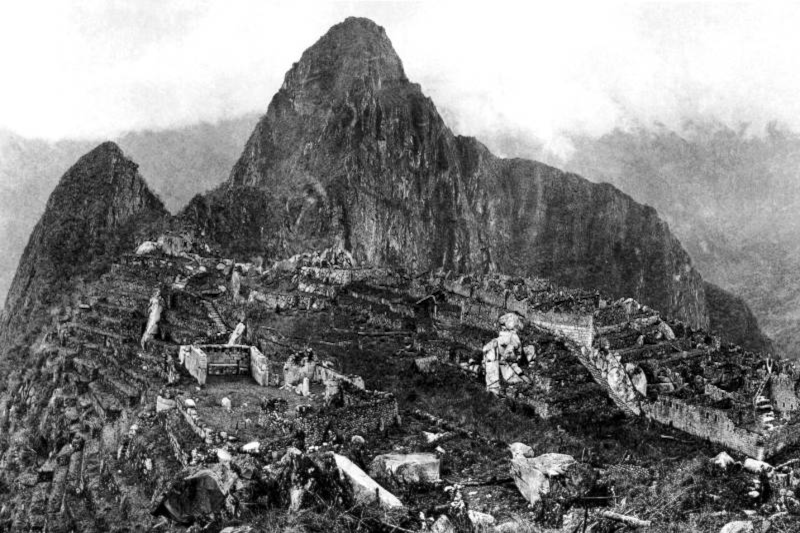
You’re probably here for one simple thing: when was Machu Picchu built? The short and clean answer to this question is that Machu Picchu was constructed and utilized during the 15th (1400s) century. Main construction is summarized to date from about 1450-1460. A newer accelerator mass spectrometry (AMS) radiocarbon date indicates that people were on the site as early as approximately AD 1420 through approximately AD 1530-1532. Yes, it is a range of dates, not just a birthday.
First, the “tell me in one sentence” version
When asked «At a party (group chat)» You can explain: Machu Picchu was the site of an Inca civilization and it was constructed in the 1400s. Yes, that’s right, and that’s what UNESCO says resulted from disruption in the 16th century and a post-disruption abandonment in the 15th century.
Now for the tiny twist: that one sentence is right, but it’s also a little too neat. Real history usually is.
So why do you see different dates?
People are using different evidence and they aren’t all measures of the same thing.
- Many traditional histories place the start of the conquests between AD 1450 and 1460, which correspond to the rule of Pachacuti.
- The organic materials related to people, NOT the stones, are dated by AMS radiocarbon dating. The results of those indicate activity from about AD1420.
Consider it as a work timeline. One source is the “official launch date.” Another source is the first time the team showed up, opened the laptop, and started building the thing. Both are useful. They’re answering slightly different questions.
Why the date is a range (and that’s not a cop-out)
Here’s the thing: you can’t radiocarbon-date stone. Bone, charcoal, textiles, wood, etc. are organic materials carbon dating can be performed on. So it turns out that when scientists date Machu Picchu, they’re dating who built the buildings, rather than the buildings themselves.
In addition to that, the Inca left behind no alphabetic building inscriptions, unlike some other cultures who left inscriptions. There are lots of written records written post the Spanish, so there is always a balance between remembering and being political and being a storyteller. Researchers use clues: architecture, ceramics, burials, landscape and lab. It’s similar to the triangulation of a place when GPS is flaky.
Machu Picchu location: the mountain shaped the plan
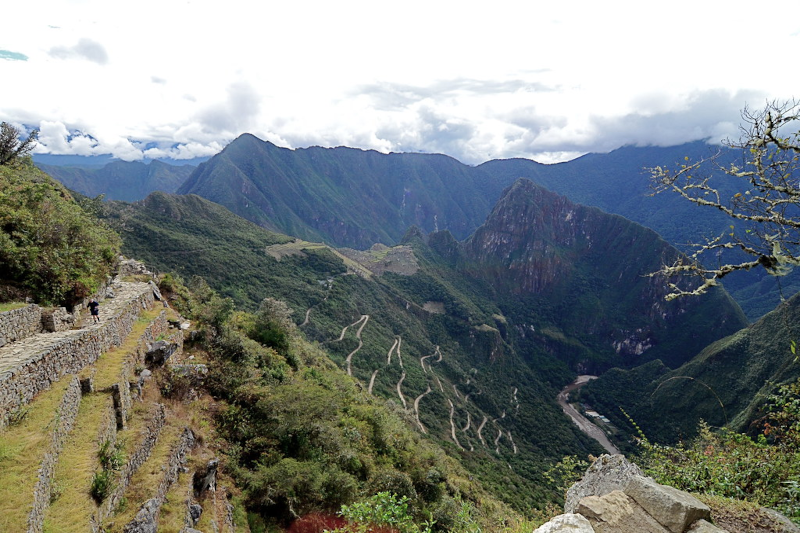
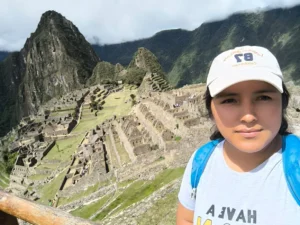
A stunning mountain city in the Andes, where the mountains begin to merge into the Amazon Basin, where lies the renowned city of Machu Picchu, above the Urubamba River. Peruvian cultural authorities estimate that it is approximately 112.5 km north-east of Cusco.
And this matters. A lot.
Steep, rainy slopes are not an easy place to build on. There is gravity and there are priorities.Gravity is not concerned with priorities. Rain is not aware of your deadlines! So the Inca had to treat stability, water control, and drainage as core requirements—not “nice extras.”
Where it fits in the Inca civilization timeline
Zoom out for a second and the dates click into place. The Inca Empire expanded quickly, especially in the 15th century. That’s when big state projects show up—roads, terraces, administrative hubs, fortresses and elite estates.
- Before the 1400s: the Inca were one regional power among several in the Andes.
- 15th century: rapid growth of the Inca state, with major building programs often associated with rulers like Pachacuti.
- About AD 1420–1530/1532: the AMS window for activity at Machu Picchu fits the late, high-power period of the empire.
- AD 1532 onward: Spanish conquest brings massive disruption across the Andes.
- AD 1911: Hiram Bingham’s expedition makes Machu Picchu famous internationally, though it wasn’t “unknown” to local people.
Who built Machu Picchu?
Machu Picchu was built by the Inca, under state authority centered at Cusco. Many interpretations connect it to Pachacuti Inca Yupanqui.
But “Pachacuti built it” is like saying a CEO built a headquarters. It points to leadership and timing. It skips the real work.
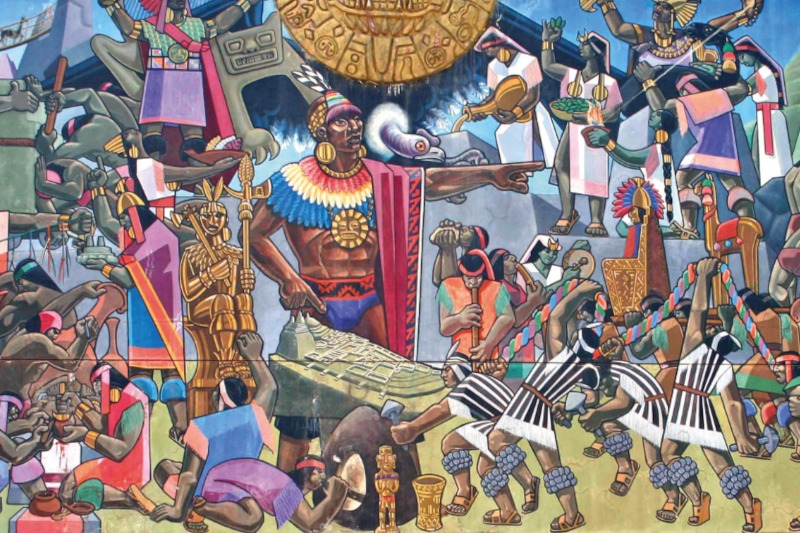
In reality, this would’ve taken planners, stonemasons, engineers, terrace builders, farmers, and administrators coordinating labor and supply. If you’ve ever been on a big project with tight handoffs, you can almost feel the schedule pressure.
Was it built all at once?
Probably not—though there may have been a major push that happened within a relatively short span.
Most big builds follow a familiar pattern: set the base, bring up the core, then keep tweaking. Machu Picchu likely had phases too:
- Site selection and layout
Pick the ridge, map the zones, plan movement and sightlines. - Terraces and stabilization
Create flat surfaces, reduce erosion, and keep the slopes from failing. - Water capture and distribution
Route spring water through canals and fountains—because no water means no site. - Residential and ceremonial construction
Plazas, compounds, temples, storage—this is the “visible” city. - Maintenance
Rain, plant growth, and settling never stop, so repairs can’t stop either.
How it was built: Inca architecture, without the lecture voice
Inca architecture at Machu Picchu is famous for stonework, and sure, it’s stunning. But the bigger flex is how everything works together: stone + soil + slope + water.
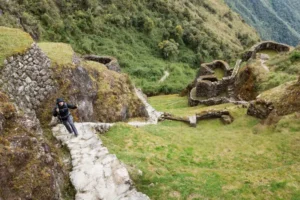
- Dry-stone masonry (many walls fit tightly without mortar)
- Terracing (farming, stability, and erosion control in one move)
- Drainage (quiet, constant, essential)
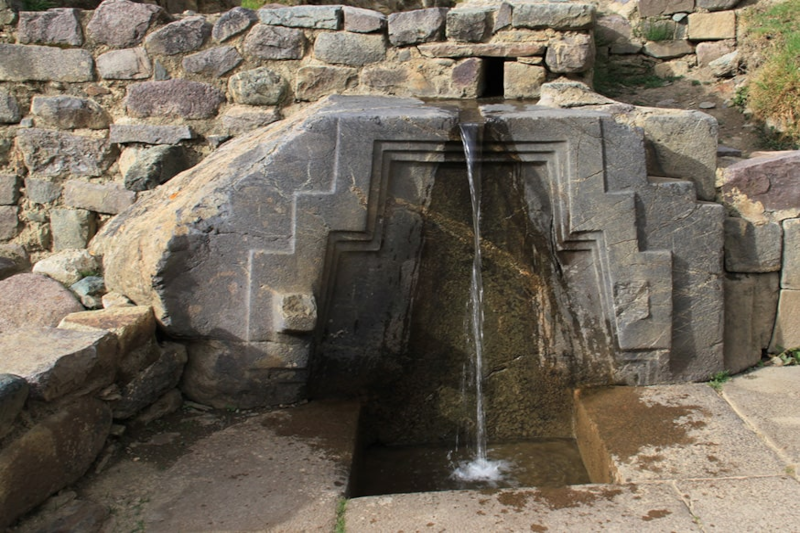
- Canals and fountains (managed water, not random runoff)
- Trapezoidal openings (a common Inca form in doors and windows)
UNESCO calls Machu Picchu a masterpiece of architecture and engineering. That can sound like brochure talk, but it’s also practical: the place lasted because it was built to last.
The quiet MVP: drainage
If you want one detail that explains a lot, it’s drainage.
Machu Picchu gets heavy rainfall. Without drainage, water pools, soils shift, and retaining walls lose the fight. Research on the site’s water supply and drainage shows how deeply these systems were built into the plan.
Small tangent, but it connects: modern buildings fail for the same reason. Not because the lobby looked bad. Because water went where it shouldn’t. Machu Picchu is a reminder that the “boring” parts are often the hard parts.
Was Machu Picchu built before the Inca?
It’s a common question—and it makes sense, because Machu Picchu looks timeless.
But based on current evidence, the monumental site is Inca. The newer AMS dating doesn’t make it pre-Inca; it suggests Inca activity may have started earlier than the classic mid-1400s estimate—by decades, not by thousands of years.
When was Machu Picchu abandoned?
We don’t have a signed note that says “we’re leaving,” but the broad timing is clear. Machu Picchu appears to have been abandoned in the 16th century, during the disruption tied to the Spanish conquest. UNESCO links abandonment with that conquest period, and radiocarbon evidence also fits an end around AD 1530–1532.
And just to clear the air: the Spanish didn’t build Machu Picchu.
FAQ (quick answers you can reuse)
What is the exact time of the construction of Machu Picchu?
In the 15th century (the 1400s). There is considerable variation in the dates that have been given for substantial construction, with AD 1450-1460, as cited by many sources, and a date of around AD 1420, as indicated by AMS dating.
Who built Machu Picchu?
With state machinery, a coordinated work force and skilled specialists, the Inca.
Did it take one year to build Machu Picchu?
No. The evidence justifies a staged construction and maintenance over a longer period.
In which country is situating Machu Picchu?
About 112,5 km northeast of Cusco, on the barren land above the Urubamba River in Peru‘s city of Cusco.
Bottom line: the timeline that holds up
If you can only remember one thing, this is it: the eleventh and last place where one could see evidence of a functioning city inhabited by people of the Inca civilization was in 1400s, built around 1420 and active until about 1530-1532).
It’s not a “mystery city” from deep time. It’s something more human—and, in a way, more impressive: a place built by people who understood terrain, water, labor, and logistics… and then proved it on a mountain ridge, stone by stone.