
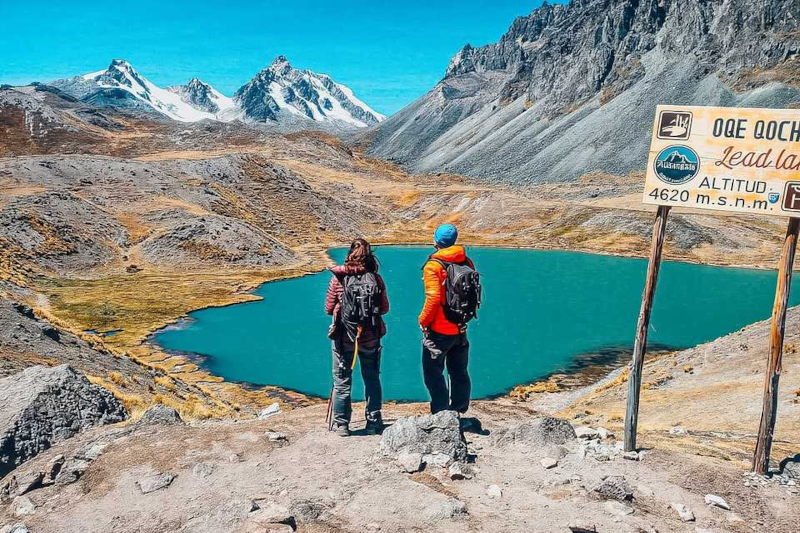
You’ve probably seen the photos: glassy blue water, snow on the peaks, alpacas posing like they know they’re famous. That’s the 7 Lakes of Ausangate (you’ll also hear 7 lagoons of Ausangate). It’s a day trip from Cusco that feels way bigger than a “day trip.” And yes—people compare it to Rainbow Mountain. Fair. But this one often feels calmer, quieter, and a little more… personal.
Here’s the deal: below you’ll find the real logistics (pickup times, costs, what stings, what’s worth it), plus a packing list that helps you stay warm at 6 a.m. and comfortable at noon. Because the Andes love to switch moods.
So… what is the “seven lakes” day trip, really?
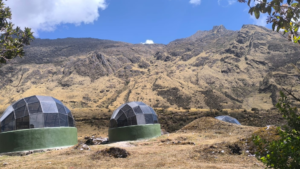
The “seven lakes” route is a high-altitude loop near Nevado Ausangate, one of the most dramatic mountains in the Andes. You walk through open valleys and pass a chain of lakes. Each lake can look different—teal, sapphire, milky blue-green—depending on light and minerals.
Some days the water reflects the mountains like a mirror. Other days the wind roughs it up and the lakes look wild and textured. Both versions are beautiful. Just different.
Distance-wise, it’s not huge. But (and this is the big “but”) it’s very high. Think above 4,300 m / 14,100 ft most of the time. Ever tried walking fast at that altitude? Your lungs will file a complaint.
The early alarm clock situation (Cusco → Pacchanta)
Most people go with a tour from Cusco. Pickup is usually between 4:00 and 5:00 a.m.. That sounds rough—because it is—but it’s also smart project planning. You’re buying daylight and safer trail time.
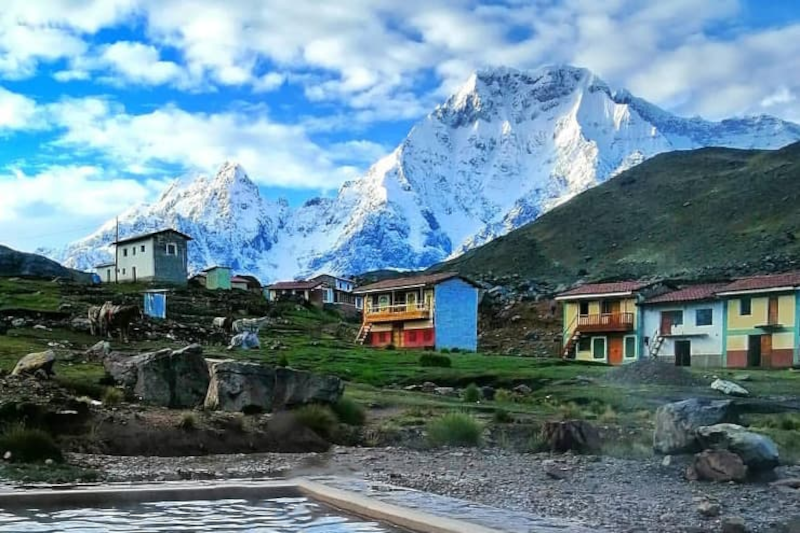
The drive to Pacchanta (the trailhead village) is usually around 3 hours each way. Many tours stop for breakfast on the way, or serve a simple one when you arrive. Either way, eat. At altitude, skipping breakfast is like showing up to a meeting without Wi‑Fi and pretending you’re fine.
When to go: the weather’s “personality”
The easiest window is the dry season (May to September). You’re more likely to get clear skies and steady footing. Still, mornings can be below freezing, and the sun later can feel strong enough to roast your nose in 20 minutes. The Andes love contrast.
A quick side note: if you’re traveling in shoulder season (April or October), you can still have an amazing day. You just need more flexibility. Think “light rain plan,” not “perfect photo day guaranteed.”
Cost talk: group tour vs private tour
Prices vary, but here’s the usual range for a 7 Lakes of Ausangate day trip:
- Group tour: often $30–$50 USD per person. Many include transport, an English-speaking guide, and basic meals (breakfast + lunch).
- Private tour: often $120–$160 USD total (depending on group size and inclusions). You get flexibility—more time at lakes, fewer “keep moving” moments, and a pace that matches your legs, not the fastest person in a 12-person group.
Before you book, do a quick scope check. Ask what’s included: meals, entrance or community fees, hot springs entry, trekking poles. Tours don’t always bundle the same items, and that’s how surprise costs sneak in.
The hike itself: what you’ll see (and what it feels like)
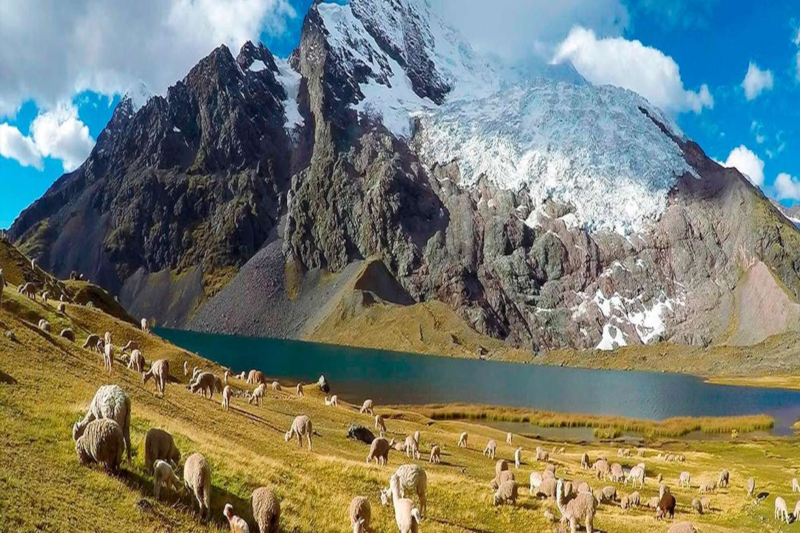
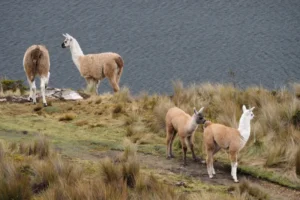
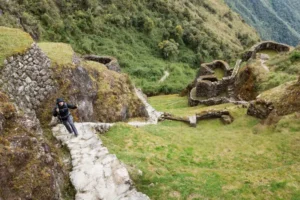
From Pacchanta, the trail heads into open country—wide valleys, streams, and soft-looking hills that stop feeling soft when you’re breathing thin air. You’ll likely see alpacas and llamas. If you’re lucky, a condor might cruise overhead.
And yes, you’ll stop a lot for photos. Not because you’re dramatic. Because the light changes fast up there, and the lakes look different every time you turn around. It’s one of those places where you keep thinking, “Wait, this one is even better.”
Two popular lake stops people mention are Pucacocha and Qomercocha. If the water is calm, they’re prime reflection-shot candidates. If it’s windy, they’re still beautiful—just more moody, less postcard.
About that Rainbow Mountain comparison: Rainbow Mountain is iconic, but it can feel like a human traffic jam. The Ausangate 7 lakes route tends to be quieter. Not empty, but calmer. You can hear the wind. That matters.
Difficulty + altitude: your friendly risk management section
This is the part where I contradict myself a little. The hike is doable. The hike is also hard. Both are true.
By terrain alone, many people call it moderate. Altitude changes the math. At 4,300–4,700 m, even a gentle incline can feel like you’re carrying an invisible backpack full of bricks.
Here’s what helps (and it’s simple, not magical):
- Acclimatize: spend 2–3 days at elevation (Cusco is a good start) before this hike.
- Pace yourself: slow and steady beats “I’m fine” until you’re not.
- Hydrate + snack: small, regular bites work better than one big meal.
- Know the red flags: severe headache, confusion, repeated vomiting, or trouble walking straight = stop and get help.
If you use Diamox (acetazolamide), talk with a clinician before your trip. Lots of travelers also swear by coca tea. It’s common in Peru. It’s not a superhero cape, but it can feel soothing.
Culture break (because this place isn’t only scenery)
This region is home to Quechua communities who herd alpacas and live with the mountain as a daily neighbor, not a weekend hobby. Guides often share the local view of Ausangate as a powerful protector spirit. Even if you’re not into mountain mythology, it adds context. You’re walking through someone’s living landscape, not a theme park.
Also: bring a little cash for small purchases. A snack here, a hot spring ticket there, a tip for your guide—tiny things that keep your day smooth.
Hot springs: the reward you’ll think about all day
Many trips end at the Pacchanta hot springs. Picture it: warm water, cold air, the mountain sitting there like it owns the horizon (it kind of does). After hours of hiking, it feels like your muscles finally exhale.
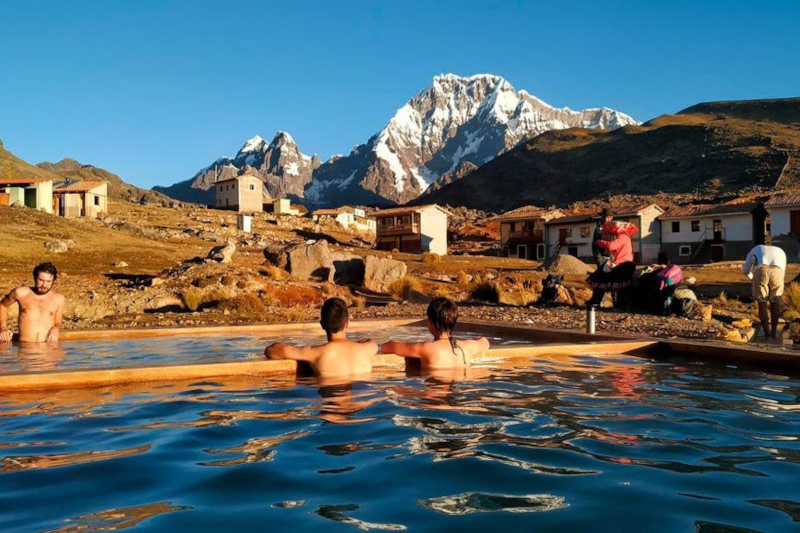
One practical note: the changing areas are basic. Pack a small towel and keep your swimsuit somewhere easy to grab.
Packing list (realistic, not “survival show”)
The goal is simple: stay warm early, don’t overheat later, and don’t get sunburned into a cartoon. Layers do that.
- Base layer: moisture-wicking top (and leggings if you get cold easily)
- Warm mid layer: fleece or light insulated jacket (Patagonia, Decathlon, whatever you already own)
- Shell: windproof/waterproof jacket (sudden rain happens)
- Pants: hiking pants; add a thin thermal layer if it’s mid-winter
- Boots + socks: broken-in hiking boots; warm socks (wool blends are great)
- Gloves + beanie: small items, huge impact
- Sun kit: sunglasses + SPF 50 + hat (UV hits harder at altitude)
- Water: bottle or hydration bladder (a Hydro Flask is nice, but any bottle works)
- Snacks: bars, nuts, chocolate—whatever you’ll actually eat when you’re tired
- Trekking poles: optional, but they help on uneven sections and downhill
- Small cash: fees, snacks, tips, hot springs
- Hot springs kit: swimsuit + small towel (+ sandals if you have them)
Small-but-mighty extras: download offline maps (Google Maps works; Maps.me is also handy), carry lip balm, and keep your phone warm. Cold weather drains batteries fast—like, comically fast.
A simple day timeline (so you can picture it)
- 4:00–5:00 AM: pickup in Cusco
- Morning: drive to Pacchanta + breakfast
- Late morning–early afternoon: hike the seven lakes loop
- Afternoon: lunch + hot springs (if included / if you want)
- Evening: drive back to Cusco
Final thoughts (and a tiny reality check)
The 7 Lakes of Ausangate trip is one of those days that feels bigger than the calendar slot it takes up. It’s beautiful, yes. It’s also tiring. You’ll breathe hard, you’ll pause a lot, you might question your life choices for a minute—and then you’ll see another lake glow in the sun and think, “Okay. Worth it.”
If you go in prepared, keep your pace steady, and treat altitude like the serious variable it is, you’ll have an amazing day. And if you end it in the hot springs? Even better.