
Rainbow Mountain 2026: A Surreal Journey to the Roof of the Andes
If the Inca Trail is a walk through history, Rainbow Mountain (Vinicunca) is a journey to another planet. Reaching an astonishing altitude of 5,200 meters (17,060 ft), this natural wonder has become the second most visited destination in Peru for a reason: its colors are simply unbelievable.
Whether you are an avid hiker or an Instagram enthusiast, here is everything you need to know about trekking Rainbow Mountain in 2025 and 2026.
Why is it Rainbow-Colored?
The vibrant turquoise, lavender, and gold stripes aren’t magic—they are science! For millions of years, different layers of minerals (iron, magnesium, and calcium carbonate) were deposited and then tilted by tectonic shifts. When the snow caps melted a few years ago due to climate change, this colorful masterpiece was finally revealed to the world.
Vinicunca vs. Palccoyo: Which one is for you?
In 2026, travelers have two main ways to see the «rainbows.» Choosing the right one depends on your fitness and how much you enjoy crowds.
Essential Survival Tips for 2026
1. The «Golden Rule» of Acclimatization
Do not make Rainbow Mountain your first trip after landing in Cusco. The altitude is no joke—it’s nearly half the height of Mt. Everest! Spend at least 2 days in Cusco or the Sacred Valley first. Your lungs will thank you.
2. Beat the Crowds (The 3:00 AM Club)
To see the mountain without hundreds of people in your photos, you’ll need to leave Cusco around 3:00 or 3:30 AM. It’s an early start, but watching the sunrise over the Ausangate glacier while you hike is a spiritual experience.
3. Pack for Four Seasons
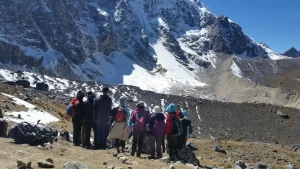
The weather at 5,000 meters is unpredictable. You might start the hike in a t-shirt and reach the summit in a snowstorm.
- Must-haves: Thermal layers, a windbreaker, gloves, a warm hat, and high-SPF sunscreen (the Andean sun is fierce!)
Don’t Forget the Red Valley!
If you go to Vinicunca, ask your guide about the Red Valley detour. It’s an extra 30-minute walk that looks like the surface of Mars. Most tours skip it, but in 2026, it remains one of the best-kept secrets for those who want a truly unique photo.