
Anyone traveling through Peru, especially the Andes, will probably meet both alpacas and llamas in markets, villages, farms, and mountain landscapes. They look related because they are, but they are not the same animal.
Understanding the difference between alpacas and llamas in Peru helps travelers appreciate their roles in Andean culture, recognize them more easily, and interact with them respectfully.
How can you tell the difference between alpacas and llamas in Peru?
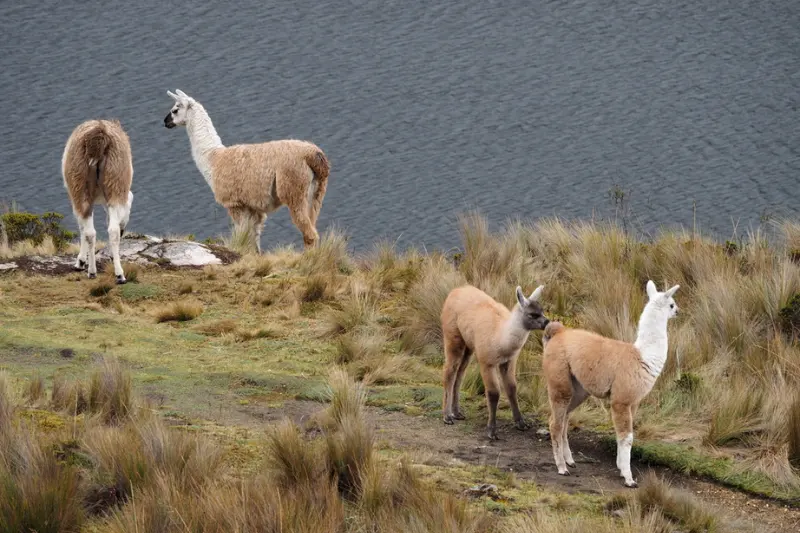
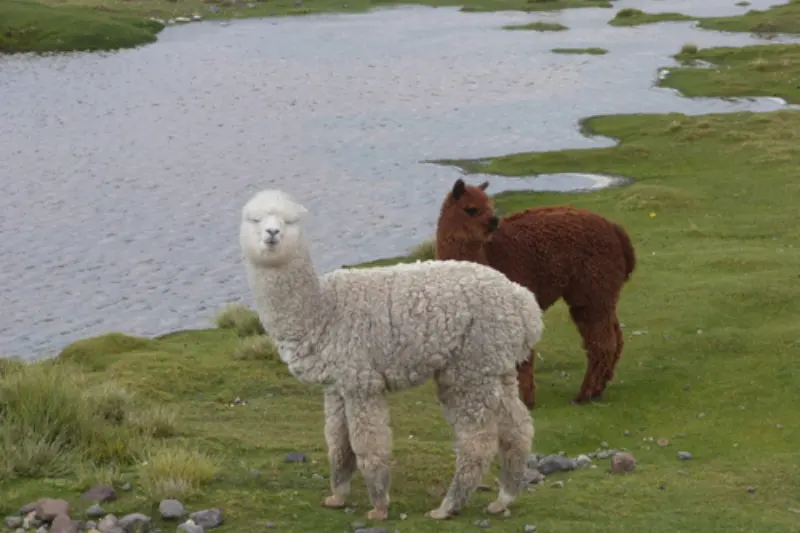
The simplest answer is that llamas are generally larger, taller, and more often used as pack animals, while alpacas are smaller, fluffier, and mainly valued for their soft fiber. In a quick llama vs alpaca comparison, size, face shape, ears, and coat stand out first. Llamas tend to have long faces and banana-shaped ears, while alpacas usually have shorter faces, smaller ears, and a denser, woollier appearance.
This difference becomes easier to spot once the two animals are seen side by side. A llama often looks more alert and upright, with a sturdy build suited for carrying loads across mountain paths. An alpaca looks more compact and rounded, with a fleece that can make it appear almost cloud-like, especially before shearing. In fact, llamas are one of the animals many hikers hope to see once they reach Dead Woman’s Pass on the Inca Trail, where they sometimes graze near the exposed high ground.
Shared Andean roots, different daily roles
Alpacas and llamas both belong to the camelid family, along with vicuñas and guanacos. In Peru, they are deeply connected to high-altitude life, where communities have raised them for generations. Both are well adapted to cold nights, thin air, steep terrain, and sparse grazing conditions.
Their importance, however, is not identical. Llamas have traditionally helped with transport, carrying goods through areas where roads were difficult or nonexistent. Alpacas have been bred mainly for fiber, which is used to make textiles, clothing, blankets, and crafts. Both animals can be part of rural livelihoods, but they contribute in different ways.
That is why the phrase alpaca vs llama is not just about appearance. It is also about purpose. One animal is often associated with strength and carrying capacity, while the other is associated with fine fleece and textile traditions.
Quick visual clues to remember
For an easy field guide, these practical signs help:
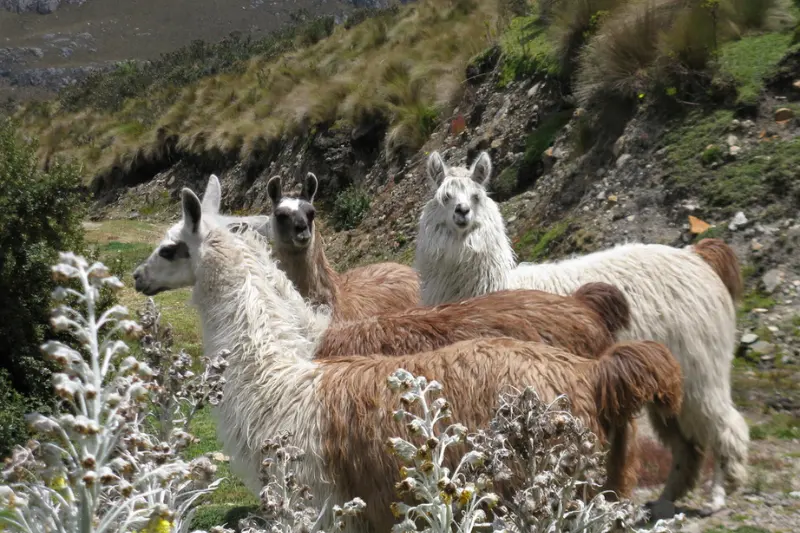
- Size: Llamas are usually taller and heavier. Alpacas are smaller and more compact.
- Ears: Llamas often have long, curved ears. Alpacas have shorter, straighter, spear-like ears.
- Face: Llamas have longer faces. Alpacas tend to have softer, shorter faces.
- Coat: Alpacas usually look fluffier because of their dense fleece. Llamas can have less uniform coats.
- Posture: Llamas often appear more upright and watchful. Alpacas may seem rounder and gentler in appearance.
- Common use: Llamas are known for carrying loads. Alpacas are known for producing fiber.
These clues are not perfect in every case, especially if an animal has recently been shorn or is a mixed-looking individual. Still, they are reliable enough for most visitors trying to understand the difference between alpacas and llamas at a glance.
Llama characteristics that stand out
Some of the most useful llama characteristics are linked to their size and temperament. Llamas are strong, sure-footed animals that can move through rugged terrain with surprising confidence. Because of this, they have long been useful in the Andes as pack animals, particularly in mountain communities. This same sure-footedness is part of why they occasionally appear along trekking routes, alongside other species covered in Wildlife in Machu Picchu: Animals You Can See in the Sanctuary.
Among common llama facts, one of the most memorable is that llamas can be protective. They are often aware of their surroundings and may act more independent than alpacas. This does not mean they are unfriendly, but it does mean approaching them calmly and with respect matters.
Llamas are also social herd animals. They communicate through body language, ear position, humming sounds, and, when annoyed or threatened, spitting. Spitting is not their default greeting, but it can happen if they feel stressed, crowded, or provoked. Giving them space is always the better choice.
Alpacas are prized for fiber and need gentle care
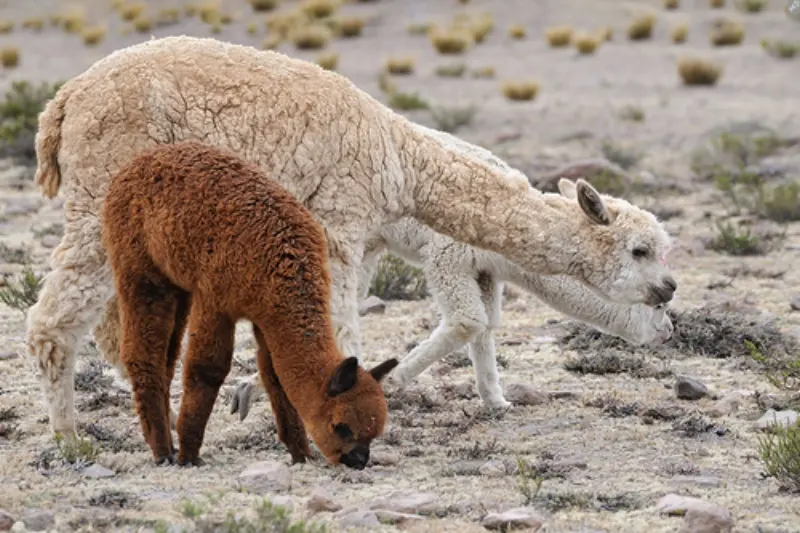
Alpacas are best known for their fleece, which is soft, warm, and widely used in Peruvian textiles. Their fiber is one reason travelers see so many alpaca sweaters, scarves, hats, and blankets in markets. The quality and feel of alpaca fiber can vary, but the animal’s reputation for softness is well earned.
Good alpaca care is practical and consistent. Alpacas need appropriate grazing, clean water, shelter from harsh weather, regular health checks, and careful shearing when the time is right. Because they are herd animals, they also do better with companionship rather than isolation.
Handling matters, too. Alpacas may look cuddly, but they are not toys or props. They can become nervous if grabbed, chased, or surrounded. A respectful approach means letting trained handlers guide interactions, staying calm, and avoiding sudden movements around the animal.
What should travelers know before visiting farms or communities?
Travelers should remember that alpacas and llamas are part of real working landscapes, not just tourist attractions. The best experiences are respectful, locally guided, and mindful of the people who raise and care for the animals. Asking before touching, feeding, or taking close photos, and following the guidance of a host or guide, goes a long way. This same principle of respectful conduct extends to protected areas more broadly, which is part of why it’s worth reviewing What Regulations Should You Know Before Visiting the Inca Trail? before any trekking-related visit.
It is also worth noticing the human skill behind the animals. Raising camelids in the Andes involves knowledge of weather, pasture, breeding, shearing, fiber sorting, and traditional textile work. Buying authentic products directly from local makers or cooperatives often means supporting that knowledge and labor more directly.
A few simple habits make visits better:
- Keep a comfortable distance. Let the animal decide whether to come closer.
- Use quiet movements. Loud voices and quick gestures can startle herd animals.
- Do not feed without permission. The wrong food can cause problems.
- Respect working animals. A llama carrying goods is doing a job.
- Ask questions. Local herders and artisans often have the best explanations.
These small choices make the encounter safer and more meaningful. They also shift the experience from «taking a photo with a cute animal» to understanding a living part of Andean culture. Curious travelers who want to dig deeper into Andean beliefs surrounding these animals may also enjoy Exploring the Myths of the Inca Trail, since several local legends involve camelids as guides or omens.
The difference is cultural as well as physical
The difference between alpacas and llamas is easy to reduce to ears, size, and fleece, but in Peru the distinction runs deeper. Llamas and alpacas are woven into food systems, transport traditions, clothing, ceremonies, trade, and identity in highland regions. They represent adaptation to a challenging environment and the long relationship between people and animals in the Andes.
That context helps explain why both animals are so visible in Peruvian travel experiences. Alpacas often appear near weaving centers, llamas on trekking routes, and both animals show up in community-based tourism settings. Travelers hiking toward Machu Picchu with a support team may also notice that some Essential Foods for the Inca Trail trace back to Andean staples historically transported by llama caravans across these same mountain corridors.
A simple takeaway for your Peru trip
When comparing alpaca vs llama, one thing is worth remembering: llamas are usually the taller, stronger pack animals with long faces and curved ears; alpacas are usually the smaller, fluffier fiber animals with shorter faces and dense fleece. Both are iconic in Peru, both deserve respectful treatment, and both offer a window into Andean culture.
Once the key traits are clear, spotting the difference becomes part of the fun. Travelers planning to combine an animal encounter with a trek may also want to check Inca Trail Permits & Requirements for Machu Picchu, since visits to certain communities or trailheads can be tied to the same permitted zones. And for those wondering whether local knowledge is worth the investment, the question addressed in Do you need a guide for the Inca Trail? applies here too: a knowledgeable guide often makes wildlife encounters safer and more informative. More importantly, understanding these animals helps travelers see beyond the postcard image and appreciate the practical, cultural, and everyday value they continue to have in Peru.