

Everyone dreams of seeing Machu Picchu. But what if you could get a sneak peek a private, distant view from another lost city, days before you even arrive? What if the key to understanding the famous citadel wasn’t found within its walls at all?
This incredible experience awaits hikers on the spectacular Salkantay Trail. While less famous than the classic Inca Trail, this route is celebrated for its dramatic mountain scenery and offers its own unique discoveries. One of the most profound moments on the journey is the discovery of Llactapata, a Quechua name meaning “High Town.” From these ancient ruins, trekkers get their first stunning glimpse of Machu Picchu, a reward after days of challenging hiking.
Looking across the valley, you quickly realize this is more than just a scenic stop. Archaeologists believe the Inca built Llactapata to interact perfectly with its famous neighbor, providing crucial context that redefines your understanding of Machu Picchu long before you set foot inside.
What is the Salkantay Trail? The Adventurous Path to Machu Picchu
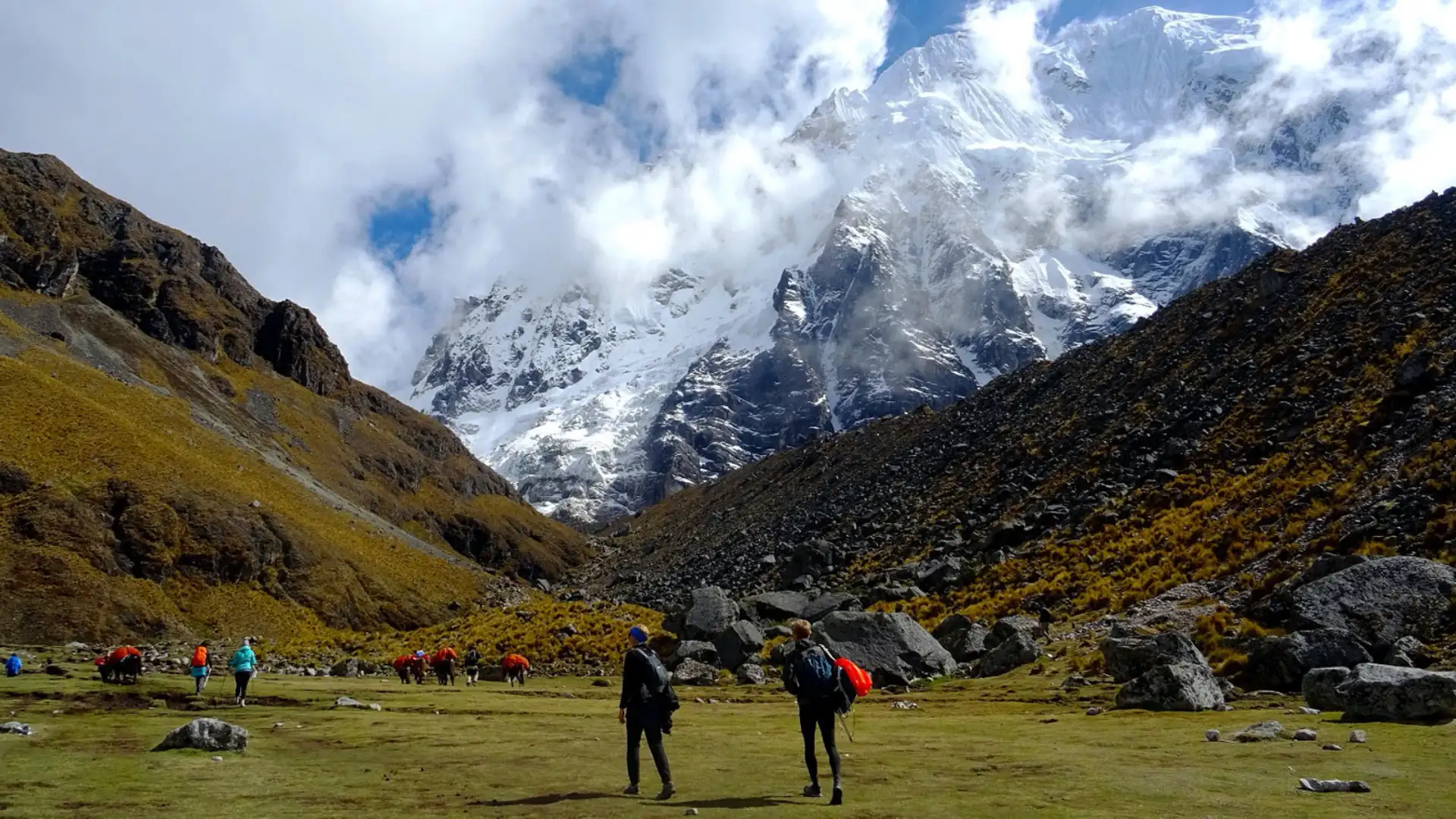
While the classic Inca Trail is famous for its history, the Salkantay Trail is celebrated for its dramatic, untamed scenery. Often considered the more adventurous path to Machu Picchu, this trek offers a stunning alternative for those who crave breathtaking landscapes over crowded footpaths. Instead of following one ancient road, the Salkantay hike guides you through an incredible range of ecosystems, making every day feel like a journey to a different world.
The adventure begins with a powerful ascent toward the heavens. Your first major challenge is conquering the Salkantay Pass, the highest point of the trek at a dizzying 15,200 feet (4,630 meters). Here, you are surrounded by a starkly beautiful world of rock, ice, and alpine lakes, all under the watchful gaze of the sacred Salkantay mountain, whose glaciers glisten in the high-altitude sun.
But after the pass, the landscape performs a stunning transformation. The trail plunges downward, and the cold, thin air gives way to warmth and humidity. You descend into the «ceja de selva,» or the eyebrow of the jungle—a vibrant cloud forest. This lush, green world is alive with the hum of insects, the flutter of butterflies, and the scent of wild orchids and budding coffee plants.
This journey from icy peaks to tropical jungle defines the Salkantay trek. It’s a path that tests your limits and rewards you with unparalleled natural beauty. And deep within this jungle environment, on the fourth day of the hike, the trail reveals one of its most incredible secrets: a lost city with a view.
Day 4 on the Trail: What It Feels Like to Discover Llactapata
After a challenging morning’s climb out of the valley floor, your path along an original Inca trail cuts through dense jungle. The air is thick with the scent of wild orchids and damp earth. Then, just as your legs are starting to burn, the trees suddenly part. You step out of the humid shade and into a sunlit clearing on a high ridge. This is Llactapata, and for a moment, you’re simply catching your breath, taking in the forgotten stone walls covered in moss.
The ruins themselves are captivating a series of agricultural terraces and stone structures cascading down the slope. They feel quiet and mysterious, a place that time has largely left alone. Unlike the bustling final destination of your trek, here you are likely to be one of only a handful of people, sharing a private moment with Inca history. It’s a peaceful reward that marks a key milestone in your Salkantay trek day 4 itinerary.
But it’s not the ruins that truly seize your attention. It’s the view. As your eyes adjust, you look directly across the deep, grllactapataeen Aobamba valley to the opposite mountain ridge. And there it is. For the first time on your journey, you see the grand prize: Machu Picchu. The Llactapata view of Machu Picchu is a rare, side-on profile of the entire citadel, a perfect miniature city perched impossibly on its peak. It’s distant, yet unmistakably clear.
Why Was Llactapata Built? More Than Just a Pretty View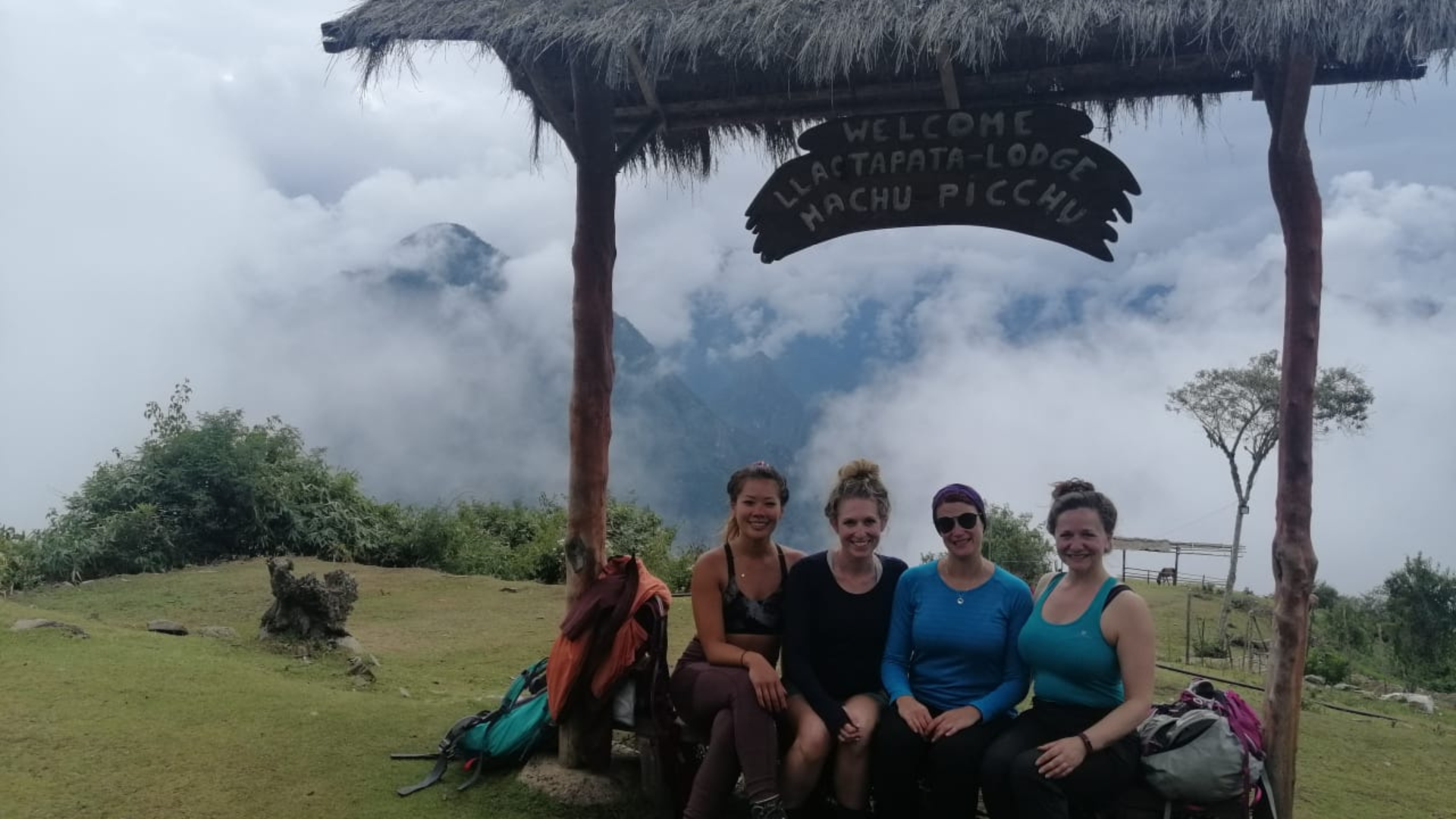
That breathtaking view across the valley was no happy accident. The Inca were master planners, and the history of the Llactapata Inca site reveals its deliberate and critical role in the empire. Rather than an isolated village, Llactapata was a vital satellite settlement a purpose-built outpost designed to support the grand citadel of Machu Picchu. It was a place of work, worship, and control, proving that Machu Picchu didn’t exist in a vacuum but was the hub of a complex and interconnected network.
Archaeologists believe Llactapata served several simultaneous functions, making it an incredibly efficient piece of urban planning. For travelers and officials on the trail, it was a crucial waypoint. For the empire, it was a productive and sacred extension of its most famous estate. The Llactapata ruins served at least three main purposes:
- A Checkpoint & Rest Stop: It policed a key route into the Machu Picchu valley, acting as an administrative gateway where travelers and goods could be monitored.
- A Farming Outpost: Its extensive terraces, or andenes, were used to grow crops like maize and coca to feed the population of the main city. The fertile climate here is the same reason you’ll find modern Salkantay trek coffee plantations thriving in the valleys below.
- A Sacred Ceremonial Site: The site had a deep spiritual significance directly linked to its famous neighbor.
While its roles as a tollbooth and a farm were essential for the empire’s daily life, this third function holds Llactapata’s most brilliant secret. The Inca didn’t just build it with a view of Machu Picchu; they built it to align with the heavens themselves.
The Hidden Genius: Llactapata’s Secret Alignment with Machu Picchu
This is where the story of Llactapata shifts from impressive to truly breathtaking. The Inca were not just master builders; they were expert astronomers who saw the sky as a divine blueprint. They engineered their most important structures to mirror the movements of the sun, and the location of Llactapata is perhaps the most brilliant example of this celestial planning. The site was built to perform a sacred function, turning the entire landscape into a massive, functioning clock.
Imagine standing at Llactapata during the June solstice—the shortest day of the year in the Southern Hemisphere and a deeply sacred event for the Inca. As the sun crests the distant mountains, its first rays shine directly across the valley. From this precise vantage point, you would see the sunrise perfectly aligning with the Temple of the Sun, Machu Picchu’s most sacred building. For a few moments, a beam of light would have physically connected the two cities.
This alignment is no coincidence; it is a work of pure genius, a 500-year-old secret hidden in plain sight. The Inca would have had to survey, calculate, and build with astonishing precision to place Llactapata in the only spot on the mountainside where this celestial event occurs. The Llactapata archaeological complex discovery thus confirmed that the two cities were not just neighbors; they were part of a single, interconnected, and sacred design.
Today, as a hiker on the Salkantay trek, you stand in the exact footsteps of Inca priests and astronomers. That unforgettable Llactapata view of Machu Picchu is more than just your first glimpse of Machu Picchu on Salkantay; it’s a window into the mind of the Inca. You are seeing the lost city not as a standalone ruin, but exactly as its creators intended: connected, sacred, and aligned with the cosmos.
Is Llactapata Worth Visiting? How it Transforms Your Salkantay Trek
After days of hiking, you might wonder if a detour to another ruin is worth the effort. For Llactapata, the answer is a resounding yes. It redefines your entire journey to Machu Picchu, shifting your perspective before you even set foot in the famous citadel.
Many hikers are familiar with the Salkantay trek vs Inca trail first view debate. The classic Inca Trail leads to the Sun Gate (Inti Punku), which provides a breathtaking, close-up panorama—the grand, emotional reveal. Llactapata offers something different, and arguably deeper: a distant, contextual perspective. From this unique angle, you see Machu Picchu not as an isolated wonder, but as the intended centerpiece of a grander cosmic design.
Seeing this connection with your own eyes transforms the Salkantay trek from a physical challenge into a journey of discovery. It provides a layer of understanding that visitors arriving by bus or train completely miss. You’re no longer just walking toward a destination; you’re tracing an ancient, celestial road map. This insight makes your eventual arrival at Machu Picchu feel far richer and more meaningful.
So, is Llactapata worth visiting? If you want to not only see Machu Picchu but truly understand it, the site is essential. Choosing the best Salkantay tour including Llactapata ensures your trek tells a complete story, from cosmic alignment to final arrival.
How to Get to Llactapata: Trek Itineraries and Day Hikes
Fortunately, accessing this incredible viewpoint is straightforward for most Salkantay trekkers. The vast majority of 5-day Salkantay tour operators build this stop into their itineraries, typically on the third or fourth day. When searching for the best Salkantay tour including Llactapata, you’ll often see it listed as a highlight.
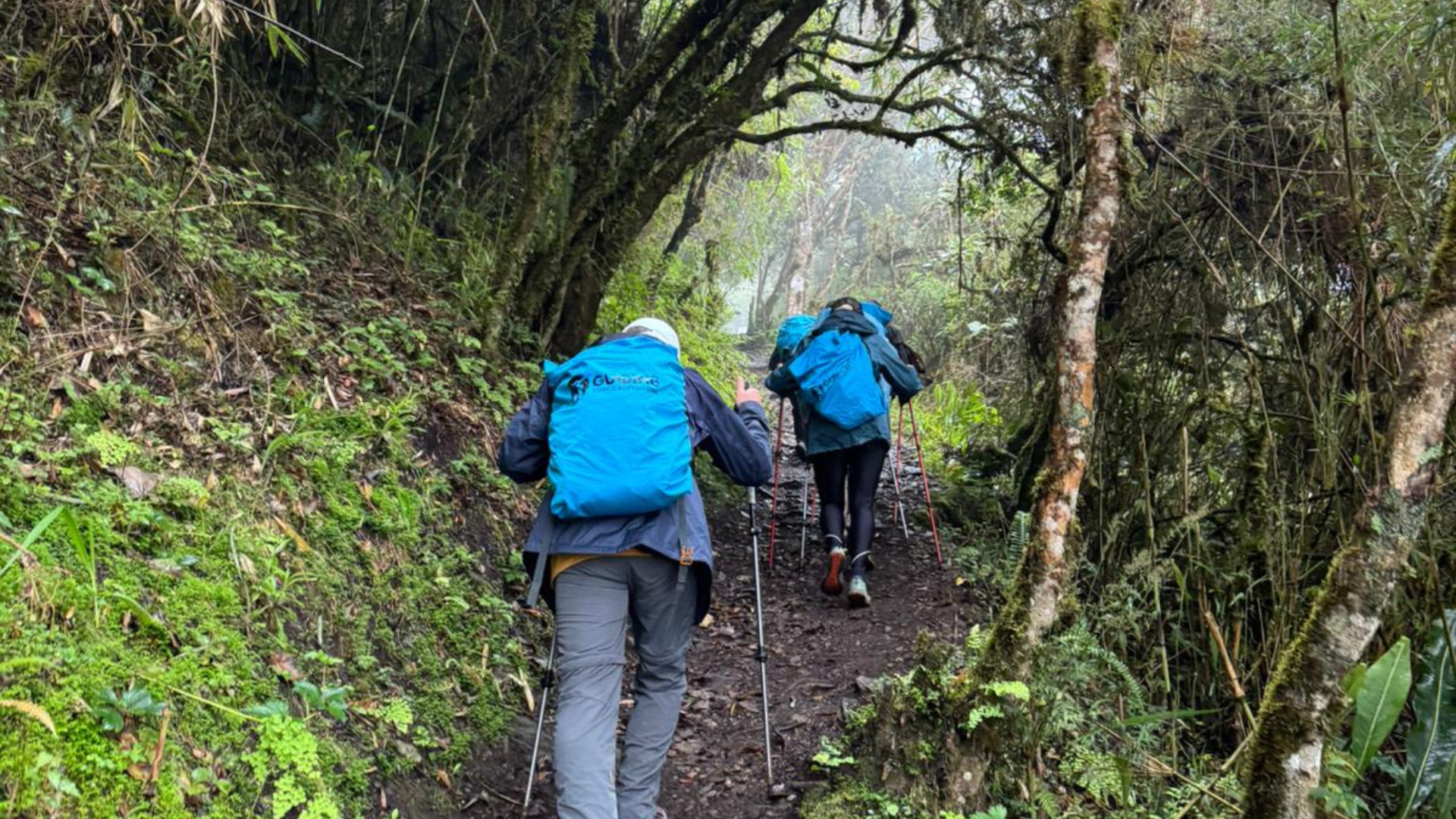
For travelers with more flexibility or those piecing together their own adventure, the Llactapata trek is most commonly started from the small coffee-growing village of Lucmabamba. From the village, a clear but steep trail zig-zags uphill for about two to three hours through lush cloud forest and coffee plantations. The climb is challenging, but the forest shade and anticipation of the view make it a beautiful journey.
After you’ve explored the ruins and savored your private view of Machu Picchu, the Llactapata to Hidroelectrica trail guide is simple: you’ll follow a path that descends the other side of the mountain. This two-hour downhill hike brings you to the Hidroelectrica train station, a bustling junction where you can either catch a train or walk the final flat stretch along the tracks to Aguas Calientes, the town at the base of Machu Picchu.
This route—up from Lucmabamba and down to Hidroelectrica—creates a perfect point-to-point hike that feels like a final pilgrimage before the main event. Whether you’re part of a guided group or trekking solo, this path is your ticket to unlocking a deeper understanding of the entire region.
Essential Tips for the Llactapata Hike: Packing, Altitude, and What to Expect
For the climb from Lucmabamba, you’ll only need a light daypack, but knowing what to pack for the Llactapata hike is crucial. The trail winds through a humid cloud forest where mosquitos and other biting insects thrive. A strong repellent isn’t just a suggestion—it’s your most important piece of gear. Beyond that, focus on these essentials:
- Insect repellent (strong, DEET-based is best)
- Sunscreen and a hat
- Sturdy, broken-in hiking shoes
- Water and high-energy snacks
- Coca leaves or candy for altitude
Regarding Llactapata altitude and acclimatization, there’s good news. At roughly 9,300 feet (2,840 meters), the ruins are lower than Cusco. By this stage of the Salkantay trek, your body should already be well-adjusted. Still, many hikers find that chewing coca leaf, a centuries-old Andean tradition for managing fatigue and altitude, provides a welcome boost during the steep ascent.
The steep trail and buzzing insects might test your resolve, but these are small hurdles on the path to an unforgettable reward. Following these essential tips ensures you can focus not on discomfort, but on the incredible moment the forest parts and your final destination appears in the distance.
See Machu Picchu with New Eyes: The Final Piece of the Puzzle
You once saw Machu Picchu as an isolated marvel. Now, you see it as the brilliant centerpiece of an interconnected world—a world unlocked by understanding Llactapata on the Salkantay Trail. You can appreciate not just the destination, but the genius of the journey the Inca designed.
As you consider future travels, try looking for the «Llactapatas» in every destination—the overlooked viewpoints that tell a deeper story. Start by asking, «What’s the connection here?» This simple question transforms a visit into a discovery, empowering you to find the hidden narrative wherever you go.
Should you ever stand on that ridge, you won’t just see a preview of Machu Picchu. You’ll see the full picture—a celestial secret shared across a valley—and arrive at the famous citadel not as a tourist, but as someone who understands its place in the world.