
Pull up the elevation profile after you book and something shifts in your chest. That reaction is useful. Seventy-four kilometers, a pass that sits above 4,600 meters, five days of moving through conditions your body wasn’t designed for. Nobody exaggerates the Salkantay to make it sound impressive. The numbers do that on their own.
What gets people into trouble isn’t the mountain being deceptive. It’s showing up having underestimated what consecutive days at altitude actually take from you. Day one feels like a hard hike. Day two is a different category of experience. Knowing that gap exists before you’re inside it changes what you do with the months leading up to the trip.
No technical climbing anywhere on this route. Ropes stay home. What gets tested is fitness built over real training time, not gym sessions from the week before the flight. Acclimatization that actually happened in Cusco, not rushed through in a day. And enough honest self-assessment to know that motivation alone doesn’t carry legs over a 4,600-meter pass when the air has 40 percent less oxygen than you’re used to.
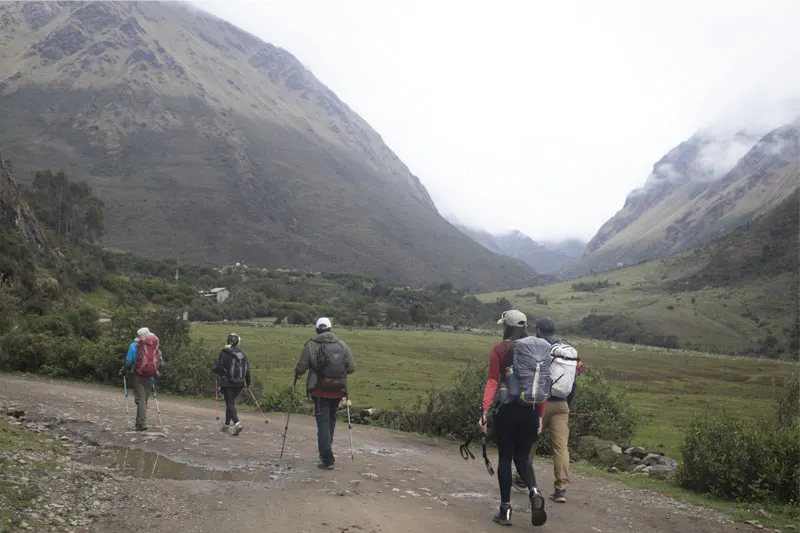
What Is the Salkantay Trek Difficulty Level?
Ask guides who’ve run this route thirty, forty, fifty times and most of them land at seven out of ten for the salkantay trek difficulty level. Hard enough to hurt people who didn’t prepare. Achievable enough that a first-timer who did the work crosses the finish line every single week during dry season.
Three things produce that number and they all arrive simultaneously. Altitude slows down every physical process while the trail is still demanding full output from your legs. Back-to-back long days pile up without recovery time sitting between them. And the kind of fatigue that accumulates across five days compounds differently than a single hard effort, in a way that training can approximate but not fully replicate. One of those alone is manageable. Together they’re what a seven looks like.
People who’ve never done a multi-day trek before finish the Salkantay. The condition attached to that statement is preparation that started ten to twelve weeks before departure, not the week before. Someone who did that work has a genuine shot. Someone who assumed their general fitness level would handle it usually finds out otherwise somewhere in the first two kilometers of the Day 2 climb.
The Daily Breakdown: Terrain, Distance, and Trail Conditions
Day 1: Challacancha to Soraypampa and Humantay Lake
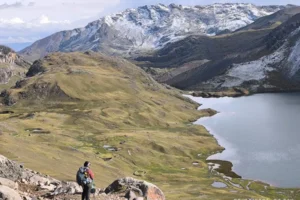
Drive from Cusco to the trailhead, then a relatively flat stretch to the first camp at Soraypampa sitting at 3,900 meters. Afternoon adds an acclimatization hike up to Humantay Lake. Short in distance, steep enough to feel immediately. Salkantay trek weather shows its character at the top of that climb. Sweating hard on the way up and then wind off the glacier drops the temperature near freezing the moment you stop moving. The layering system gets its first real test on Day 1 afternoon, not Day 2 like most people expect.
Day 2: The Salkantay Pass
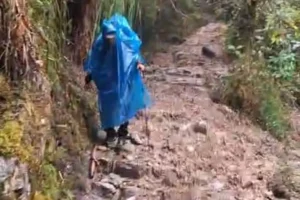
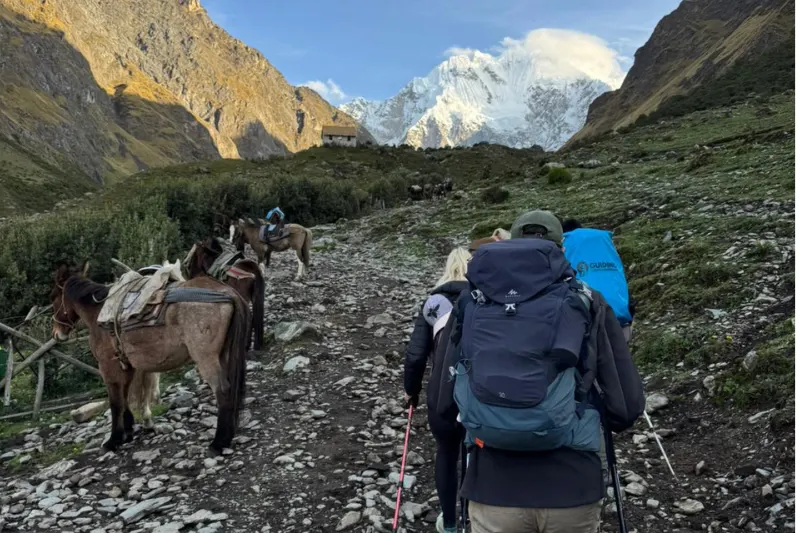
Pre-dawn start. Dirt trail gives way to rocky moraine and loose scree as the altitude rises. The challenges of the Salkantay trek concentrate here more than anywhere else on the whole route. Salkantay trek camping the night before at elevation means waking up already oxygen-depleted, which is the worst possible starting condition for the hardest climb. Seven hundred meters of gain over roughly seven kilometers. That sounds like a solid morning hike until you’re doing it at 4,500 meters and each step costs noticeably more than the last.
Day 3: The Descent into Cloud Forest
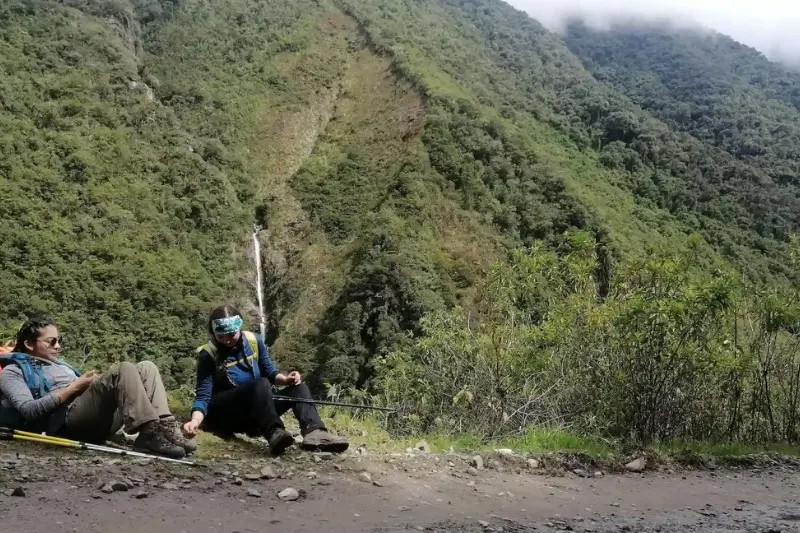
Breathing gets easier as the altitude drops. Knees start a different conversation entirely. Long descent on rocky, uneven, frequently muddy trail into Peruvian cloud forest. Temperature climbs as altitude falls and the climate shift happens fast enough to feel like crossing a border. Down jacket goes into the pack, bug spray comes out. Beautiful day that is simultaneously punishing on every joint below the hips.
Day 4: Llactapata to Aguas Calientes
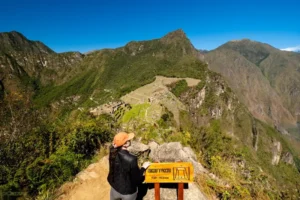
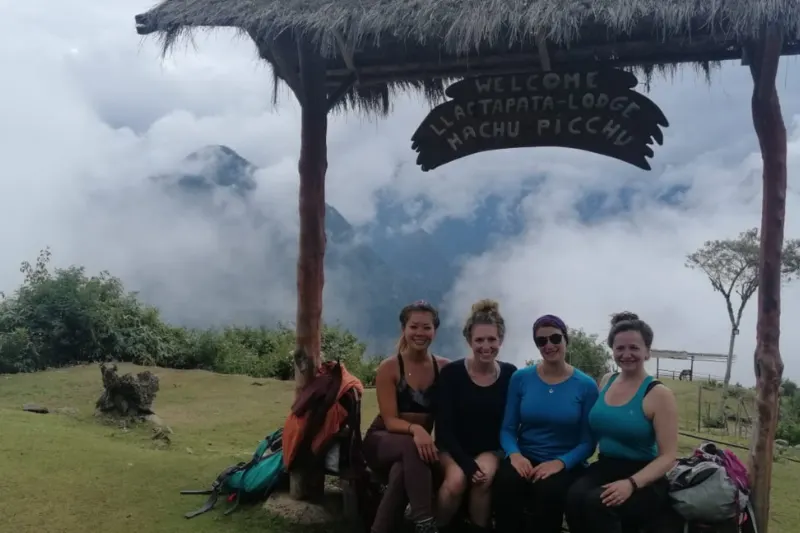
Moderate climb to Llactapata ruins delivers the first distant look at Machu Picchu. Then a steep drop to the valley floor and a long flat walk along railway tracks to Aguas Calientes. The tracks ask almost nothing of the lungs. They ask plenty from feet that have been carrying a human being through serious terrain for three consecutive days. Blisters that felt manageable on Day 2 have developed strong opinions by this point in the trip.
Day 5: Machu Picchu
Steep ninety-minute stair climb to the citadel before sunrise or the bus. Adrenaline does most of the heavy lifting on Day 5. The stone steps are uneven and demand real attention even when the legs want to treat this as a formality.
The Invisible Hurdle: Altitude Sickness
Altitude sickness doesn’t negotiate with your marathon times. Doesn’t read your training log or check how many days a week you’ve been at the gym. Fit people get hit hard at 4,600 meters while complete beginners beside them feel completely fine. The air at the Salkantay Pass holds roughly 40 percent less oxygen than at sea level and that number stays the same for everyone standing on it.
Trek starts at Soraypampa at 3,900 meters and peaks at 4,630 meters on the pass. The body adjusts to lower oxygen given time at progressively higher elevations. That’s the whole mechanism. Time. Not effort, not supplements, not willpower applied to the problem.
What actually shifts the outcome:
- Time in Cusco first: Two to three full days at 3,399 meters before the trek starts. Sacred Valley sits slightly lower and works well for the first day or two of acclimatization.
- Water: Three to four liters daily at altitude. The air is genuinely dry up there and fluid loss through breathing alone is significant before sweating even begins.
- Food: Carbohydrate-heavy meals, light on fat and protein, zero alcohol during acclimatization days. The body needs fuel it can access quickly at altitude, not anything that slows digestion.
- Coca: Coca leaf tea and coca leaves. Used in the Andes for this exact purpose for a very long time. Everywhere in Cusco and effective for mild symptoms.
- Diamox: Acetazolamide prescribed by a travel medicine doctor before leaving home. Speeds up acclimatization in a meaningful way. Worth the pre-trip medical appointment.
- Pace: Slow. Deliberately, almost frustratingly slow. Walking at a pace where conversation flows normally prevents the oxygen debt that triggers acute mountain sickness faster than almost anything else on the trail.
Symptoms that need attention: persistent headache, nausea, dizziness, fatigue that rest doesn’t fix, shortness of breath while sitting still. Any of those go to the guide right away. None of them improve by pushing harder through them.
Understanding Salkantay Trek Weather
Four distinct climate types across five days. Planning for salkantay trek weather means packing for all of them at once because the route doesn’t ask which one you were expecting.
The is May through October. Stable trail, clear skies, good views of the peak. The cost is nighttime temperature at altitude. Clear nights mean no cloud insulation and camps above 4,000 meters drop hard below freezing after dark. Frost on the tent fabric at 4 AM is standard dry season, not a bad luck situation.
November through April brings warmer nights and consistent rain. Trail conditions get muddy, exposed sections can become genuinely risky, and February sits at peak wet season where some operators close the route entirely. Certain experienced trekkers deliberately choose the wet months for the empty trail and the dramatic cloud formations at altitude, going in with honest expectations about what they’re signing up for.
- May to October (Dry): Stable conditions, clean mountain views, freezing nights above 4,000 meters.
- November to April (Wet): Warmer nights, daily rain, muddy trail, some February closures.
- June to July: Coldest nights of the dry season, strongest midday UV at altitude.
The swing between a frozen pre-dawn at high camp and a humid cloud forest afternoon on Day 3 is wide enough that layering isn’t a packing strategy. It’s the entire structure your kit is organized around.
Preparing Your Body: Fitness Requirements
Six to nine hours of moving daily over consecutive days at altitude requires cardiovascular endurance, functional leg strength, and conditioning that comes specifically from hiking under load on real hills. General fitness from other activities helps. Trail-specific fitness is what gets you over the pass without falling apart on the descent.
Ten to twelve weeks before departure. Not ten to twelve days.
Foundation
- Cardio three days weekly, 30 to 45 minutes of running, cycling, or swimming.
- Leg and core work twice weekly. Squats, lunges, calf raises, planks.
- One weekend hike of two to three hours in the actual boots and pack going to Peru.
Load
- Cardio four days weekly with interval training added. One minute hard, two easy, repeated. Simulates the exertion pattern of climbing at altitude better than steady-state work does.
- Weighted step-ups on a box, loaded squats and lunges.
- Weekend hikes pushed to four to six hours on steep terrain with pack weight up to five to seven kilograms.
Peak and taper
- Stair climber machine used consistently with added weight where accessible.
- Back-to-back hiking days. Five hours one day, four hours the next. Trains the body to move again before yesterday’s soreness has cleared.
- Final week: cut volume hard. Let the muscles arrive in Cusco recovered rather than already spent.
Vinicunca, the Rainbow Mountain hike at 5,200 meters, works as a test day while acclimatizing in Cusco. Short compared to the pass climb but it gives real data about how a specific body handles thin air before committing to five consecutive days of it.
What to Pack for the Salkantay Trek
What to pack for the Salkantay trek starts with one question for each item: does this do a specific job in changing conditions across five days? Anything that can’t answer that question is weight the legs carry over a 4,600-meter pass for no return.
Footwear
Mid-to-high cut waterproof hiking boots. Ankle support on rocky moraine matters and waterproofing earns its place at stream crossings and in rain. Trail runners work for people with strong ankles who’ve put real loaded miles in them before this trip specifically. Broken-in means months of regular use. Two test walks around the block before the flight doesn’t count.
Trekking poles
Redistribute up to 20 percent of body weight from legs to arms across the whole day. On the long descent into cloud forest on Day 3 they protect knees from the kind of damage that makes the final two days significantly harder than they need to be. Worth packing even for people who’ve never used them before.
Pack structure on guided tours
Pack horses carry personal duffels of five to seven kilograms between camps. Daily carry is a daypack at five to eight kilograms. The difference between that and hauling a full expedition pack over the pass is not a small distinction. It’s probably the single biggest comfort variable on the route.
Daily daypack contents:
- Water: Three liters minimum, more on hot descent days.
- Layers: Rain shell, warm mid-layer, sun protection for exposed sections.
- Food: High-calorie snacks easy to eat while moving without stopping.
- Health: Personal first aid, sunscreen, bug spray for cloud forest days.
- Documents: Passport and any required permits.
Meals at the Salkantay Trek
Meals at the Salkantay trek consistently surprise people who assumed camp food would be fuel and nothing more. A cook travels with the group and handles three meals daily. After the Day 2 pass crossing with wind and altitude and legs that have been working since before sunrise, sitting down to hot soup and fresh bread at a camp table is one of those small things that hits heavier than any restaurant meal has in recent memory.
Breakfasts are hot and filling before long days. Dinners at camp after hard days become the social center of the whole trip. The point where the group stops moving long enough to talk about what the day actually felt like from the inside.
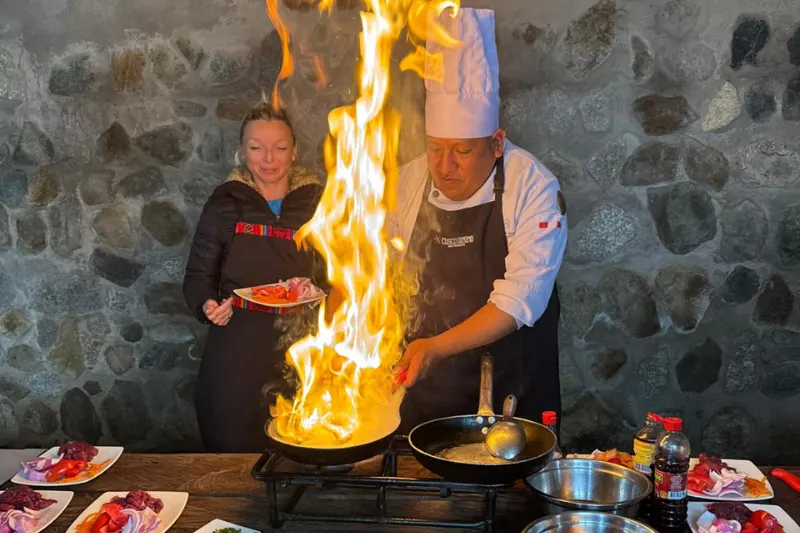
Some operators on the higher end include a cooking class on the Salkantay trek as an evening camp activity. The group prepares a meal alongside the cook using local Andean ingredients, native potato varieties, quinoa, choclo. It fills the rest hours between arriving at camp and going to sleep with something that has cultural weight to it rather than just waiting for the next day to start.
Salkantay Trek vs Inca Trail
Salkantay trek vs Inca Trail is where most people end up spending time before choosing either route and the honest version of the comparison is that they’re different enough that placing them in direct competition misses the point.
Inca Trail is archaeology on foot. Stone paths the Incas laid, ruins appearing throughout the route, entering Machu Picchu through the Sun Gate the same way people entered it five centuries ago. Government permits cap at 500 per day including guides and porters. Sells out six to eight months in advance. Highest point is Dead Woman’s Pass at 4,215 meters. Distance around 42 kilometers.
Salkantay is landscape on foot. Glacial lakes, a massive snow-capped peak, descent from frozen to tropical across three days. No government permit needed. Bookable weeks out in most cases. Higher at 4,630 meters on the pass. Longer at 74 kilometers. Generally harder on both altitude and total distance by any honest measure.
One isn’t better. They answer different questions. Want to walk through history, Inca Trail. Want raw Andean landscape with fewer booking constraints, Salkantay. Some people do both on the same trip and come away feeling they saw two genuinely separate sides of the same region.
Trekking Salkantay Without a Guide
Legally open to independent trekkers, unlike the Inca Trail which requires a licensed guide by law. Experienced backpackers finish it solo and some of them have a great time doing it that way. The real tradeoff is concrete: without pack horses you’re carrying fifteen to twenty kilograms over a 4,600-meter pass and managing your own navigation, campsite logistics, and emergency decisions in a remote area with limited communication. That moves the difficulty from a seven to a nine.
For most people asking the question, guided is the right call. Meals handled, gear transported, safety oxygen on hand, navigation covered. Someone who has done the route forty times standing next to you when the weather changes fast or someone in the group starts showing serious altitude symptoms. The cost difference between guided and independent doesn’t reflect the actual value difference between them.
A Final Word on Mental Fortitude
Day 2 delivers a specific moment to most people. Wind across the face, lungs doing noticeably less than usual, the pass still visible above and still far. Everything costs more than yesterday and the summit looks the same distance away it did thirty minutes ago. That moment is part of the route. Knowing it’s coming before you’re standing in it is preparation too.
The total distance to the top becomes manageable the moment you stop calculating it and start moving toward the nearest small thing instead.
What Day 2 costs fades quickly once it’s done. Looking back down from the pass at what you just climbed, and eventually standing above Machu Picchu at the Sun Gate, those don’t fade the same way.
Frequently Asked Questions
How difficult is the Salkantay Trek and can first-timers complete it?
Sits around seven out of ten, challenging but non-technical with difficulty coming from altitude and consecutive long days rather than any climbing skills. First-timers finish it every week in dry season with ten to twelve weeks of targeted fitness work and real acclimatization in Cusco before the first day on the trail.
What’s the biggest challenge on the route?
Day 2 over the pass, gaining 700 meters over seven kilometers at extreme altitude after camping at elevation the previous night. Day 3 descent is hard on knees, Day 4 tests accumulated fatigue on feet that have worked hard for three days, and Day 5 runs on whatever adrenaline is left over.
How do I handle altitude sickness on the route?
Two to three full days in Cusco before starting, three to four liters of water daily, carbohydrate-heavy food with no alcohol during acclimatization. Coca leaf tea helps with mild symptoms. Diamox prescribed before the trip helps more. Walk slowly the whole way up and tell your guide immediately when any symptoms appear rather than waiting to see if they resolve.
When is the best time to go and what weather should I expect?
Dry season May through October for stable trails and clear views with freezing nights at altitude. Wet season November through April for warmer nights and heavy daily rain with some February closures. Pack for major temperature swings between high altitude mornings and cloud forest afternoons regardless of which month the trip falls in.
Is it better to go with a guide or independently?
Independent is legal and experienced backpackers do it well, but carrying a full expedition pack over the pass without horses pushes difficulty from seven to nine out of ten. Guided tours cover meals, gear transport, safety oxygen, and all logistics in ways that make the experience safer and more enjoyable for the vast majority of people who attempt this route.