
Three days into the Inca Trail and most trekkers have mentally checked out of everything except Machu Picchu. The body hurts, the routine has flattened everything, and the endpoint is all that remains in focus. Then Wiñaywayna comes around a bend and none of that holds anymore.
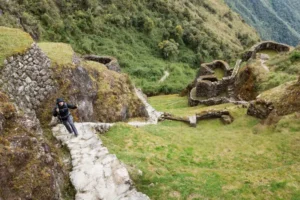
What hits first is the scale. Emerald terraces dropping steeply toward the Urubamba River, clinging to a cliffside that should not be able to hold anything at all, let alone a functioning settlement built five centuries ago without machinery. People stop walking. That happens regularly here and it makes sense when you see it.
Wiñaywayna means Forever Young in Quechua. The name belongs to both the ruins and a local orchid that blooms pink-purple directly from the ancient stones year-round without interruption. That is not a coincidence or a poetic flourish. Something about both the flower and the site genuinely earns that description, and figuring out what it is requires looking at what was actually built here and why it has lasted.
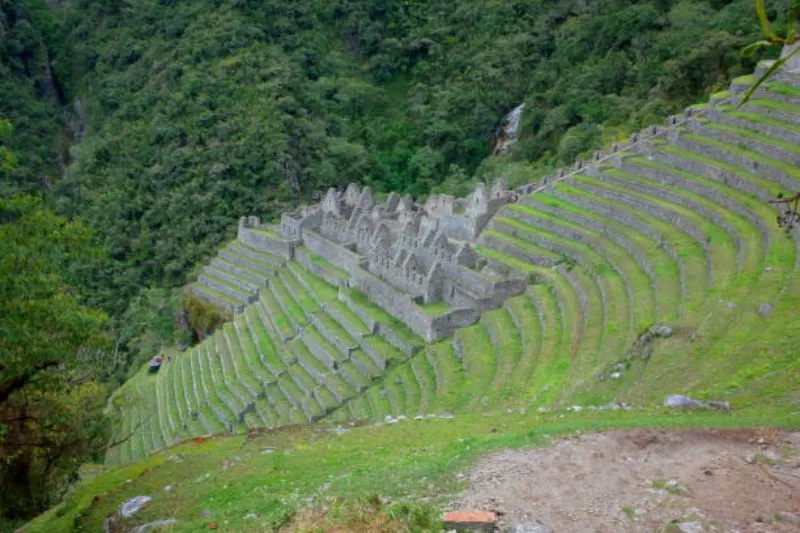
Navigating the Classic Inca Trail: how Wiñaywayna fits into your four-day itinerary
The classic inca trail four-day route treats Wiñaywayna as the emotional climax rather than a stop along the way. A Tour classic inca trail with a licensed operator is the practical way to handle permits, campsite allocation near the ruins, and the guide knowledge that prevents historical context from disappearing into general admiration of old stones. That distinction matters more than most pre-trip research acknowledges.
The last twenty-four hours tend to follow this pattern across most guided groups:
- Camp arrival at the Wiñaywayna site by mid-afternoon, dropping heavy gear before exploring the empty stone pathways.
- Sunset wandering through the ruins as fading light moves across the terraces and valley below.
- Pre-dawn departure toward Intipunku, the Sun Gate, arriving to see Machu Picchu from above as morning opens.
The hiking distance that final day is just over three miles from camp to the Sun Gate. Nobody describes it as hard in terms of distance. Three days of accumulated elevation and weight make those miles different from anything earlier on the route. Moving through this remote outpost the question of how an entire empire sustained a checkpoint on a near-vertical cliff becomes genuinely difficult to answer.
Masterclass in mountain farming: the secrets of well-preserved Inca agricultural terraces
These terraces are not flat platforms carved into a hillside. Each one was built as a layered drainage system, large stones at the base, gravel above that, rich valley soil on top. That invisible internal structure is what stopped centuries of heavy seasonal rain from pulling the mountain apart.
The retaining walls did something else entirely on top of that. Stone holds heat from daytime sun and releases it slowly through Andean nights that would otherwise freeze crops at this elevation. Maize growing at heights that frost should make impossible, because engineers five centuries ago understood thermal mass well enough to exploit it deliberately.
All of it still stands. The drainage works, the walls hold, the terraces remain productive. Working with the mountain rather than against it produced results that outlasted the civilization responsible for them. Water management is what ties the agricultural engineering to the spiritual function of the site.
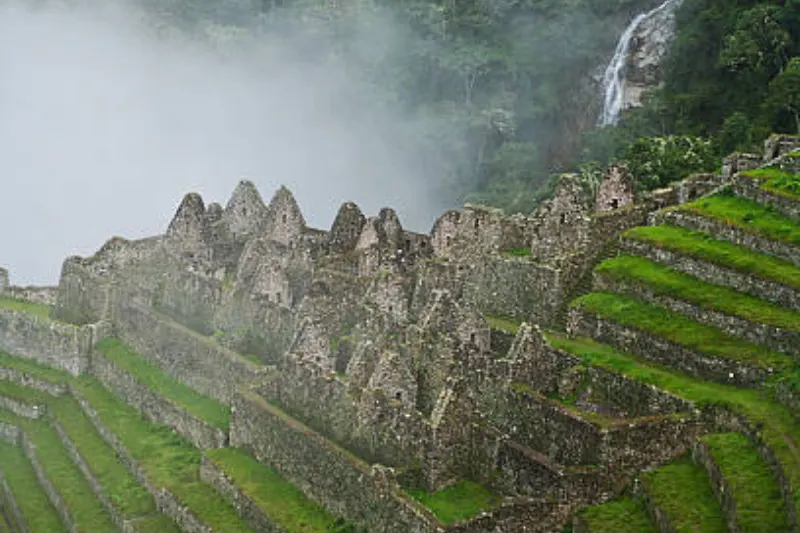
Plumbing for the soul: the significance of ritual water fountains and baths
Water here was not utility. The entire settlement of Wiñaywayna functioned as a huaca, a sacred place, where physical and spiritual reality overlapped rather than sitting in separate categories. Pilgrims heading toward Machu Picchu stopped here to wash, and that washing was understood as removing spiritual fatigue from days of mountain travel rather than just physical dirt.
Ten fountains descend the mountainside in sequence, each one feeding into the next through carved stone channels rather than collecting in any central basin. The continuous sound of water moving through each station was part of the spiritual atmosphere of the site, not a side effect of functional plumbing. Wiñaywayna was designed to be heard as much as seen.
Those same channels still carry water today. Engineers calculated slopes and angles precise enough to maintain steady flow for five hundred years without overflow or interruption. That is not an accident or lucky geology. It is hydraulic engineering that most modern infrastructure does not match in longevity.
Life in the cloud forest: architectural features and earthquake-proof construction
Seismic activity, steep terrain, constant moisture, and extreme daily temperature swings made standard construction methods useless here. Incan engineers at Wiñaywayna responded with trapezoidal windows and inward-leaning doorways built specifically to absorb and distribute shock rather than resist it. Resistance at this geology fails. Distribution holds.
Two masonry styles inside the site mark a clear social boundary:
- Imperial stonework using perfectly fitted interlocking blocks for temples and high-status quarters where no mortar was needed and no gap was visible.
- Cellular stonework using mortared irregular stones in honeycomb patterns for agricultural workers and common residents throughout the lower sections.
The orchid growing from the ancient stones in blooming pink-purple right now, today, mirrors what the site itself has done across five centuries of cloud forest weather and seismic pressure. Tips for capturing the best photos of Machu Picchu consistently point toward early morning light, and that same principle applies here. The cloud forest mist at dawn wrapping around these stones produces something that midday visits simply do not offer.
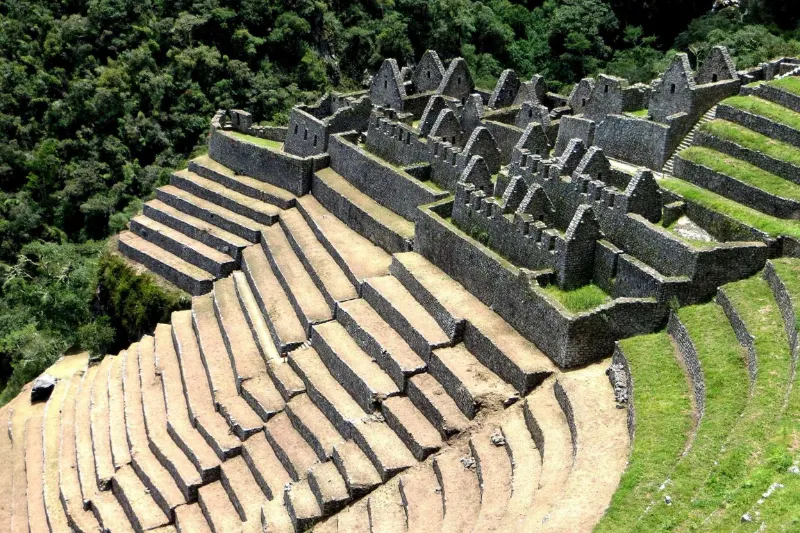
Beyond the main gate: discovering the nearby Intipata ruins and scenic vistas
Most trekkers pass the main gate and keep moving toward Machu Picchu without climbing higher. Intipata sits above the main path and gets bypassed almost entirely by groups on schedule. Travelers with limited time who chose the short inca trail as an entry point into this world often return specifically for this section on a second trip. That says something about what gets missed the first time through.
Intipata was the agricultural operation that supplied Wiñaywayna and the surrounding population. Where Wiñaywayna handled ritual and elite travelers, Intipata handled production. Engineers did not clear a forested slope here. They rebuilt the entire slope from scratch into terraced landslide-proof farmland at a scale that still reads as ambitious by current standards.
The climb up those terraces delivers the best unobstructed sightline available on the entire trail. The Urubamba River curves through the valley thousands of feet below in long visible bends. Getting up there safely starts with preparation that should begin well before the trailhead.
Preparing for the trek: permits, packing, and avoiding altitude sickness
Permits for the classic inca trail book out months in advance. The daily quota is real and enforced, and the route fills without exception. Wiñaywayna sits exclusively on this path, which means a Tour short inca trail bypasses this section entirely regardless of how either option gets presented to first-time visitors.
Coca leaf tea for altitude sickness is standard practice in Cusco and along the trail itself for reasons that become obvious at elevation. It handles headaches, fatigue, and nausea in ways that over-the-counter medication often does not reach at this height. Beyond that, 48 hours of rest in Cusco before the trek starts is the single most useful preparation available.
Cloud forest weather changes without warning, so packing priorities include:
- Breathable layered clothing handling sudden temperature swings between direct sun and cloud cover.
- Continuous hydration systems maintaining water intake consistently through the hiking day at altitude.
- High-elevation sun protection accounting for UV intensity that standard lowland sunscreen significantly underestimates.
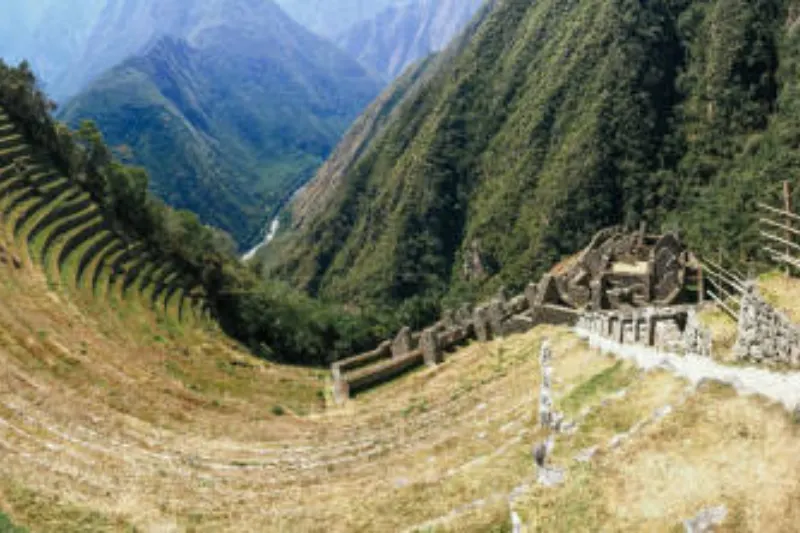
Carrying the spirit of the Andes home: why the sanctuary gateway still inspires today
Wiñaywayna is not a ruin in the standard sense. The fountains run, the terraces hold, the orchid blooms from the stones right now. A cliff that by any engineering logic should have shed everything built on it five centuries ago has not. That is not mysticism. It is the result of understanding an environment completely enough to build with it instead of against it.
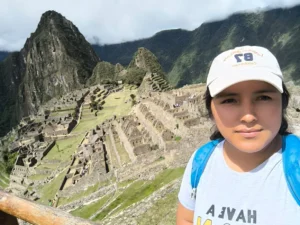
The Sun Gate at dawn is where the classic inca trail ends and where Machu Picchu first becomes visible from above, and that moment lands differently after three days of walking through everything that led to it. Wiñaywayna is a large part of why that final view carries the weight it does.
Learn a Quechua phrase before arriving, pause at each fountain, listen to water that has been running through these channels for five hundred years, and move through the place as a witness to something still functioning rather than something preserved. The name holds. It stays young. Everything around it keeps aging.