
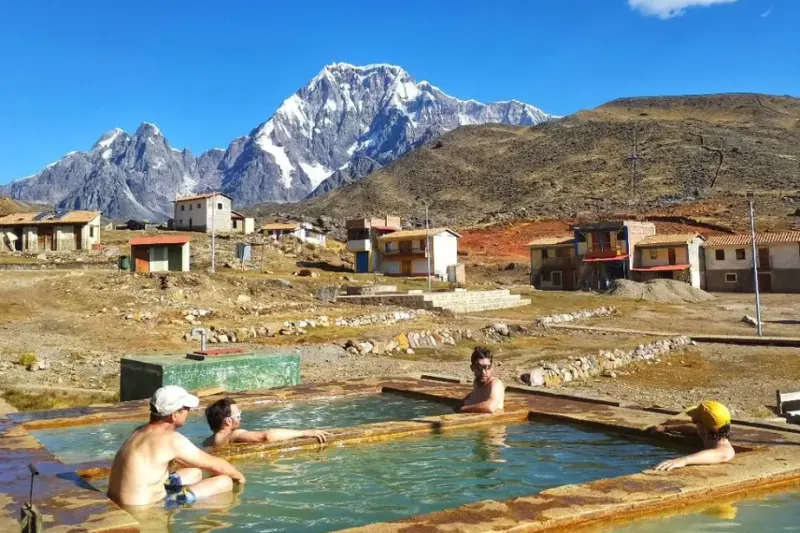
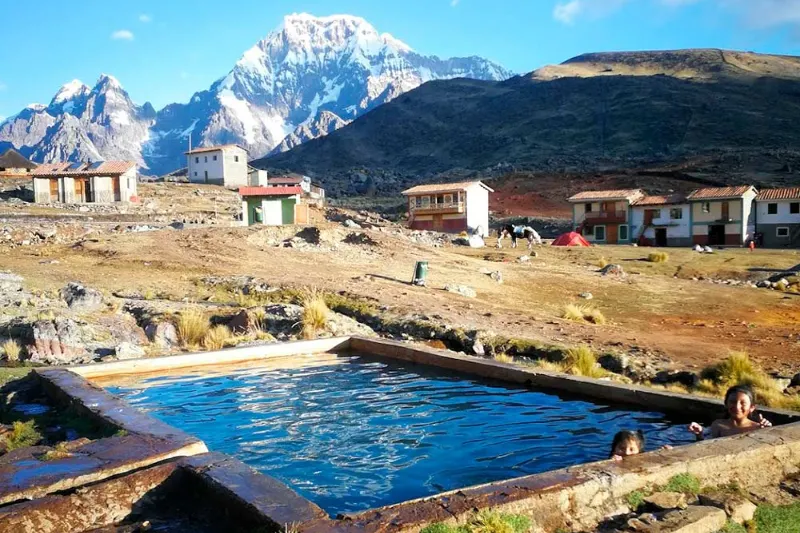
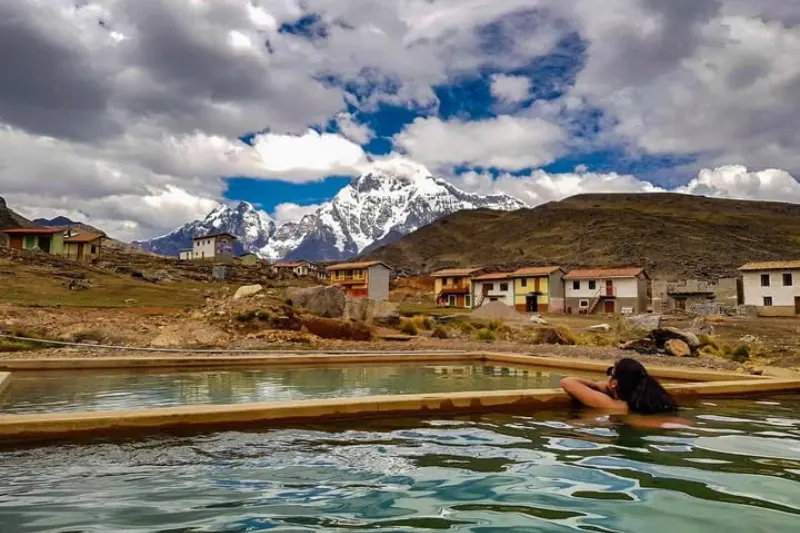
Glacial wind and steaming mineral water on the same patch of ground. The Pacchanta hot springs are at 4,200 meters, foot of Apu Ausangate, highest peak in the Cusco region. Stone pools, a glacier above, no resort setup anywhere in sight.
A day out of Cusco or the finish line of a multi-day expedition, this place gives you something the polished spots in Peru never figure out how to replicate. Nobody cleaned it up for the visitors and that’s the entire point.
People who make it out to the Pacchanta hot springs tend to say the same thing about it afterward. It stays with you in a way the standard circuit around Cusco simply doesn’t.
The Magic of Pacchanta: Healing Waters in the High Andes
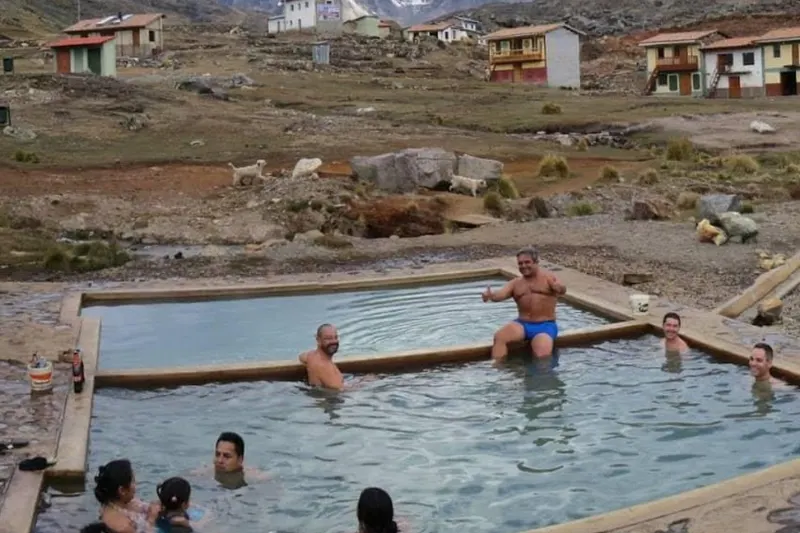
Searching for natural hot springs usually ends at ticket booths dressed up as something wild. Here the local families run the pools themselves and the stone construction looks like it was always part of that hillside.
Geothermal activity deep underground pushes water up loaded with calcium, sulfur, and magnesium. Days on mountain passes leave something in the legs that a rest day in town takes far longer to deal with than an hour in these pools.
Real physical benefits come with soaking here, especially after heavy trekking days:
- Muscle Recovery: Heat drives blood into fatigued muscles and joints, moving recovery along well past what lying down alone manages after a full day on trail.
- Skin Rejuvenation: Minerals work on skin that spent days getting beaten by mountain wind and high altitude UV without much between it and the elements.
- Altitude Adaptation: Warmth steadies breathing and drops heart rate, knocking back the headaches and tension that stack up at this elevation day after day.
Hot springs Peru options are out there but this one is in a different category entirely. Nobody came through and tidied it up.
Exploring the Ausangate 7 Lagoons Trek Route
Seven alpine lakes, color running from deep navy through turquoise into emerald depending on how glacial flour sits in the water that particular morning. The Ausangate 7 Lagoons circuit leaves from Pacchanta and comes right back to it.
Alpacas and llamas are on the hillsides the whole way, icefalls drop off the face above, and condors turn up overhead often enough that the sky becomes something you check without deciding to. That landscape around the lakes doesn’t look like anywhere else people tend to find themselves.
For anyone wrapping up the full multi-day ausangate trek, Pacchanta is the last real stop before the road back to Cusco. Getting into the Pacchanta hot springs after days crossing 5,000 meter passes is the ending that kind of route earns.
Trekking Alternatives: Pacchanta vs Lares
Pacchanta versus Lares comes up often when planning Cusco trips that involve thermal baths and mountain walking. Lares drops lower, goes through green Quechua valleys, bigger pools and more development waiting at the far end.
Pacchanta is higher, more cut off, puts you under glaciated peaks with nothing between you and the mountain. The pools are rougher and the whole environment stays uncompromising in ways the Lares valley never quite reaches.
Raw landscape over polished infrastructure, Pacchanta takes that without much of a contest. The natural hot springs here are inside a setting the Lares trek simply never gets close to from any point along its path.
Immersing in Local Culture
Pacchanta puts you inside community based tourism rather than grazing the outside edge of it. Quechua families across generations, money from hot springs peru entrance fees going straight to those families and the infrastructure they keep running.
Women here weave traditional alpaca textiles on backstrap looms using dyes from local plants and minerals. Buying directly from the weavers puts income exactly where it should land and you leave with something made in that specific place by the people who live there.
Few destinations let traveler money translate so directly into something useful for the people actually on the ground. That side of the visit adds what the pools alone never quite manage to deliver.
How to Get There: Journey to Pacchanta
Three to four hours out of Cusco and getting there independently is completely manageable. Tours exist but your own way costs less and works just as well from start to finish on the ground.
Local bus or colectivo from the terminal on Avenida Tomasa Tito Condemayta toward Ocongate and Tinki along the Interoceanic Highway, two and a half to three hours. Out the door of your accommodation in Cusco around 5:30 or 6:00 AM and there’s enough daylight to do everything without rushing the return.
From Tinki a local taxi or motorcycle handles the dirt road to Pacchanta in about 45 minutes. Hiking from Tinki through remote farming communities is three hours if the legs are up for it, arriving at the Pacchanta hot springs already warmed up and ready for the water.
Essential Planning Tips for Your Trip
When to Go
May through September, dry season, clear skies, open glacier views through most of the day. Temperatures fall hard after dark every month of the year, so warm layers stay non-negotiable even when July afternoons feel warm enough to make you think twice about packing them.
Gear and Packing Essentials
For the Hike:
- Layering system: Moisture wicking base, insulating fleece or down, windproof shell. Hot sun to snow squall in under twenty minutes at this altitude, no exaggeration.
- Footwear: Broken-in trekking boots with ankle support, the ground around the lagoons is rocky and uneven the whole way.
- Sun protection: Wide brim hat, polarized sunglasses, SPF 50 sunscreen. UV at 4,200 meters is brutal even under a covered sky.
- Trekking poles: Steep descents keep showing up around this circuit and the knees will feel the difference.
For the Thermal Baths:
- Swimwear: Waterproof bag keeps everything dry on the way into the pools.
- Quick dry towel: Microfiber packs small and handles the cold mountain air after a long soak.
- Slip on sandals: Rocky cold ground between the changing area and the water, sandals make that crossing manageable.
- Warm post soak clothes: Thick fleece, beanie, dry socks, ready to go the second you climb out of the water.
- Hydration: Water or coca tea in a thermos, altitude and heat together dehydrate faster than almost anyone coming through here actually plans for.
Conclusión
Physical recovery, raw mountain scenery, genuine cultural contact, all in one place. Few destinations in Peru pull that off simultaneously the way the Pacchanta hot springs do. The ausangate trek finish, the glacial lake circuit, or just somewhere mass tourism hasn’t reached yet, it stays with you well after the mountains are behind you.
Natural hot springs under a glacier with a Quechua village around them and nothing commercial in sight. Planning and an early alarm get you there. Once you’re in the water with Ausangate above you, the effort stops feeling like it cost anything at all.
Frequently Asked Questions
How do I get to the Pacchanta hot springs from Cusco without a tour?
Local bus or colectivo from the terminal on Avenida Tomasa Tito Condemayta toward Ocongate and Tinki, two and a half to three hours, then taxi or motorcycle from Tinki up the dirt road to Pacchanta in about 45 minutes. Walking from Tinki through farming communities takes three hours if arriving on foot works better for you.
What hiking can I do from Pacchanta?
The Ausangate 7 Lagoons circuit starts and ends here, high altitude loop past seven alpine lakes from deep blue through vivid turquoise, alpacas, llamas, icefalls, and condors along the whole route. People wrapping up the full multi-day ausangate trek usually finish at the Pacchanta hot springs before heading back to Cusco.
How is Pacchanta different from Lares and why choose it?
Pacchanta at 4,200 meters directly under Apu Ausangate, rustic stone pools, raw glacier views, managed by local Quechua families. Lares sits lower with greener valleys and more developed facilities. If high alpine setting and authentic natural hot springs matter more than comfort, Pacchanta wins clearly.
When is the best time to visit and what weather should I expect?
May through September brings clear skies and solid glacier views, cold nights throughout the whole period. April and October work for prepared travelers. December through March turns the dirt road muddy and cloud cover parks on the mountain blocking the views that make the trip worth doing.
What should I pack for the hike and the hot springs peru visit?
Layered clothing, sturdy boots with ankle support, SPF 50 sunscreen, wide brim hat, trekking poles for the hike. For the Pacchanta hot springs swimwear in a waterproof bag, quick dry towel, slip on sandals, warm layers ready right after soaking, water or coca tea in a thermos since altitude and heat together dehydrate faster than most people account for going in.