
Tour buses don’t come up here. The trails go quiet fast, and the air gets thin faster. High above the Sacred Valley sits a royal sanctuary that five centuries of inaccessibility have kept almost entirely to themselves. Its name means Little Cusco in Quechua, and that’s not modesty, it’s a description of what a king built when he wanted everything the capital offered but none of the people.
The huchuy qosqo trek is its own filter. No ticket quotas, no timed entry, no crowds waiting at the gate. The altitude and the distance handle all of that. What’s up there has been waiting undisturbed since the 15th century, and it shows in the best possible way.
History, routes, ground logistics, gear, it’s all here. Everything needed to understand the place and actually get there.
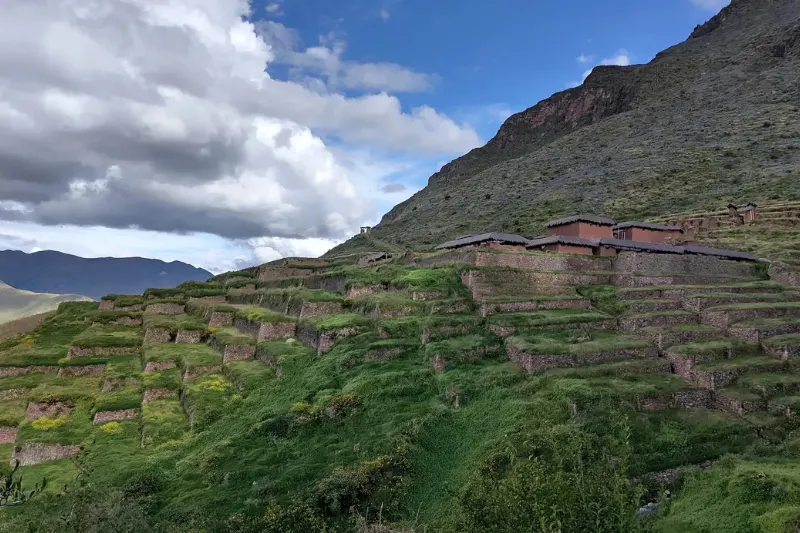
The King’s Sanctuary: How Viracocha Inca Built a Fortress Against Rebellion
The Chanca were marching on Cusco and Viracocha Inca made a decision. Not to fight, but to disappear into the mountains. What started as a place to wait out a crisis became something else entirely over time. A fortified royal estate above 12,000 feet, private by geography, defended by elevation, and built to last.
Huchuy qosqo cusco was never an administrative site. No territories managed here, no census taken, no tribute collected. It existed purely for escape, comfort, and the kind of privacy that follows a king nowhere in the capital. The altitude did what walls and guards couldn’t.
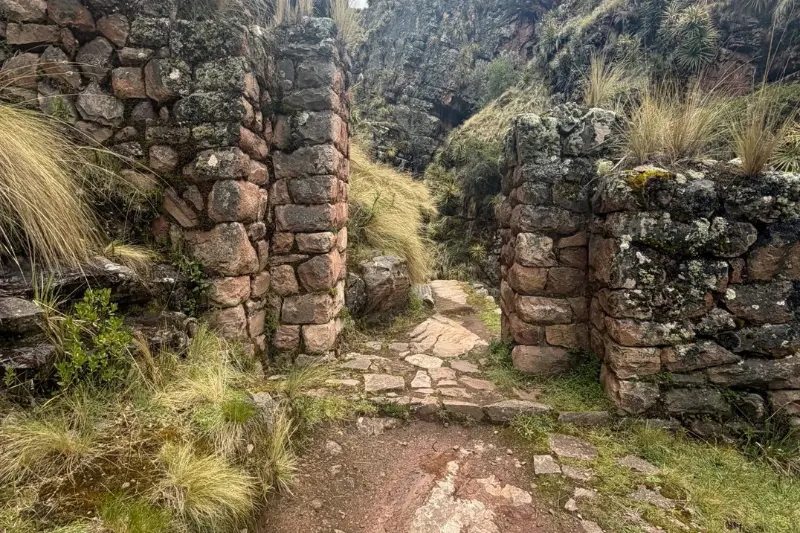
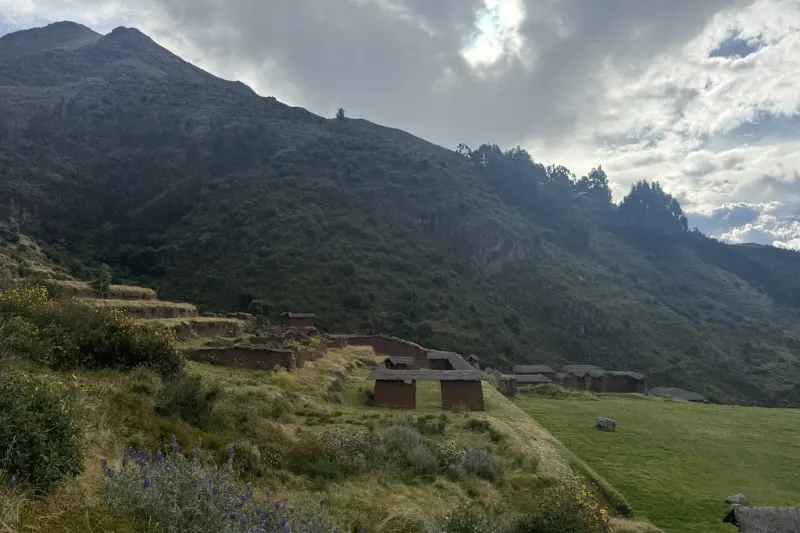
The stonework tells two different stories in the same place. Rough masonry set in mud mortar covers most of the site, standard rural Andean construction. Then suddenly, in specific sections, polished perfectly fitted stone appears out of nowhere. Those sections mark the king’s quarters. No signage required.
Deciphering the Great Hall: The Engineering of Incan Social Status
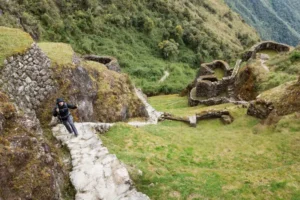
Getting inside huchuy qosqo was never straightforward. Gates created hard physical boundaries between workers and nobility that weren’t symbolic, they were structural. The triple-jamb doorway is the most remarkable surviving example, three nested stone frames where moving inward through each layer meant carrying a higher level of access than the person behind you.
Hierarchy got built into the landscape in ways that couldn’t be ignored:
- Layered entryways that controlled movement and communicated rank.
- Polished masonry appearing only in the ruler’s private sections.
- Two-story foundations projecting power across the entire mountain plateau.
The Kallanka stretches over 130 feet across the central plaza. Hundreds of nobles sheltered inside from the biting Andean wind during councils and feasts. Keeping that gathering functioning at 12,000 feet required a food system carved straight into the surrounding cliffs.
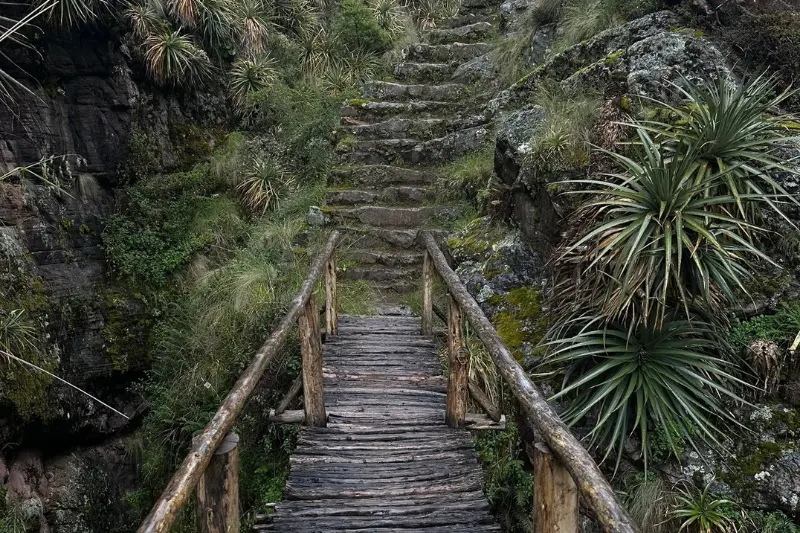
Gardens in the Sky: How Ancient Terraces Fed an Empire’s Elite
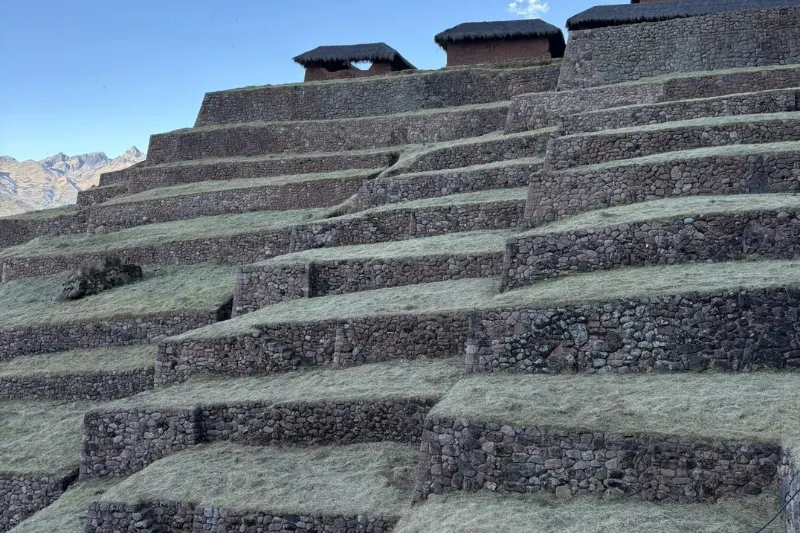
Getting crops to grow at this altitude wasn’t stubbornness. It was engineering. Andenes, massive stone terraces, got cut into the cliff faces around the estate. Glacial runoff moved through hidden canals to reach them without stripping the topsoil in the process. Sheer mountainside became productive farmland through patient, precise construction.
The thermal trick inside those walls changed everything. Heavy stone pulled in solar heat during the day and gave it back slowly through the night. That cycle created a frost buffer at elevations where frost should have ended agriculture entirely. Specialized maize and rare potato varieties grew here well above where they had any business surviving.
Walking through those suspended gardens is part of what makes the huchuy qosqo trek register as something bigger than a hike. Photographs don’t prepare people for what the actual scale of this construction feels like from inside it.
Taming the Tambomachay Trail: The Ultimate One-Day Route from Cusco
The Tambomachay route starts near an ancient water temple at roughly 12,100 feet on the edge of Cusco. Fourteen kilometers of trail then move upward through open Andean grassland where oxygen starts getting noticeably scarce. Going slow early isn’t optional on this section of the huchuy qosqo trek. It’s the entire strategy.
Apachetas start showing up past 14,000 feet, mounds of stacked stones placed by Andean travelers for centuries as offerings before crossing exposed mountain passes. Standing beside one with glaciers above and canyon drops below is the kind of moment that a camera consistently fails to do justice to.
Cresting those passes opens a long gradual descent toward the ruins with the entire Sacred Valley laid out below. For anyone with a full day and two working legs, this is the huchuy qosqo cusco route that earns its finish completely.
The Lamay Shortcut: A Steeper, Faster Path to the Clouds
Lamay sits directly below the ruins on the valley floor and the trail from there goes almost straight up. No traverses, no high passes, just switchbacks climbing a near-vertical mountainside with 2,600 feet of elevation gain packed into a distance that covers it shockingly fast.
Two hours to the top, but those two hours don’t let up for a single minute. The huchuy qosqo trek from Lamay trades distance for raw vertical intensity in a way that leaves most people genuinely spent at the summit. For travelers browsing day trips in Cusco who want something raw and honest instead of managed and comfortable, this route is consistently the one that delivers.
Showing up without proper acclimatization and attempting this ascent is a reliable way to end the day early and badly. Two solid days at altitude before the Lamay route is the minimum the body actually needs.
Breathing Easy at 12,000 Feet: Expert Tips for Andean Altitude Management
Soroche doesn’t come with much warning on the huchuy qosqo trek. A headache that shows up too early, legs that feel heavier than the distance explains, energy that drains faster than it should. Those signals are real information, not weakness, and treating them that way is what keeps most people on the trail instead of turning back.
These tips to avoid altitude sickness are what actually work before and during the climb:
- Drink double the normal daily water intake starting well before the hike begins.
- Eat light carbohydrate-rich meals the morning of the huchuy qosqo cusco ascent.
- Stop and rest at the genuine first sign of nausea or dizziness, not the second.
- Lean on local herbal remedies early rather than waiting for symptoms to compound.
Coca leaf tea has been solving this specific problem in the Andes longer than any pharmacy has existed. Muña, the caffeine-free Andean mint, handles digestion and sits in every valley market stall without needing to be searched for.
Capturing the Urubamba Range: Why Huchuy Qosqo is a Photographer’s Dream
The palace sits on a natural viewing platform with the Urubamba mountain range dropping away below on all sides. Golden Hour after sunrise is when the Vilcanota range catches warm amber light and Pitusiray peak glows against deep morning shadow in a way that midday sun simply never replicates. Getting there before that window closes is worth the early alarm.
The western edge, the King’s Balcony in local guide shorthand, is where wide-angle lenses earn their keep. Ancient stone, glacier peaks, and deep canyon drops fit into a single frame from that specific spot and nowhere else. Dry season months bring the clear skies that make that composition possible consistently.
Getting to that viewpoint means solving logistics that most travel content quietly skips over.
Roads vs. Ruins: Navigating the Remote Logistics of the Sacred Valley
A 4×4 can reach the unpaved roads near Lamay to a point, but a walking section still separates road’s end from the ruins. Most visitors skip the vehicle entirely and walk the ancient footpaths, which is how the huchuy qosqo trek was always meant to feel. Booking a Tour Huchuy Qosqo through a licensed local operator removes the guesswork entirely, covering transport, guide, and community arrangements in a single package.
No facilities exist at the site. No cafes, no ticket windows, nothing. Overnight stays with local families are the accommodation option here, real meals, real conversation, and valley life at altitude in a way no hotel captures. That setup directly supports rural communities who live at these elevations permanently.
A good local guide connects everything. Trail navigation, community introductions, historical context. Without one, the ruins are impressive stones. With one, they become a story.
Gear for the High Andes: A Minimalist Packing List for Huchuy Qosqo
UV intensity at 12,000 feet hits hard regardless of cloud cover. Burning happens well before it feels like it’s happening, and the consequences show up hours after the damage is done. Sun protection is a non-negotiable baseline on the huchuy qosqo trek, not something that lives at the bottom of the pack.
Single-day temperature swings here surprise most visitors. Frozen mornings, baking midday terraces, cold afternoons. Layers that peel off and pack small are the only clothing system that survives that range without adding unnecessary weight. Five essentials cover every version of this hike:
- Sturdy boots with deep tread for ancient slippery stone surfaces.
- A 2-liter hydration reservoir for sustained high-altitude climbing.
- SPF 50 sunscreen and a wide-brimmed hat against serious UV exposure.
- A lightweight packable rain jacket that disappears into the daypack.
- Trekking poles for protecting the knees on steep technical descents.
Getting this right turns a demanding day into one worth doing again.
Choosing Your Icon: Why Huchuy Qosqo is the Perfect Complement to Machu Picchu
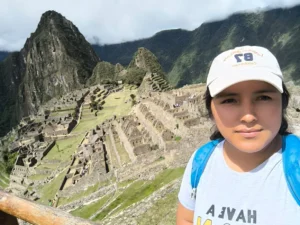
Machu Picchu is the empire at its most public. Huchuy qosqo cusco is the private version, a king’s personal world built for comfort and disappearance rather than ceremony and spectacle. Visiting both in the same trip produces an understanding of the Inca world that neither site delivers alone.
For family vacations in Peru, this site offers something genuinely different from the standard Cusco circuit. The huchuy qosqo trek runs at a pace that works for older kids and adults without feeling like a managed tourist experience. Two days, Lamay village life on day one, guided ascent on day two, and the ruins as the reward for actually showing up.
Those wanting to connect multiple Andean destinations efficiently will find that trekking packages in Peru regularly bundle Huchuy Qosqo with Pisac, Ollantaytambo, and the Inca Trail. One coherent journey through the Sacred Valley instead of separate logistics for every site.
Q&A
What is Huchuy Qosqo and why is it called Little Cusco?
A 15th-century royal estate built for Emperor Viracocha above the Sacred Valley. The name reflects how its stonework and massive great hall echo the capital’s prestige on a smaller, private scale. Designed for luxury, defense, and escape from court politics rather than public administration.
How does the architecture reveal Incan social hierarchy?
Access and status were physically engineered into every layer. A rare triple-jamb doorway acted as an elite checkpoint, polished masonry marked the king’s quarters exclusively, and two-story foundations projected authority across the plateau. The Great Hall at over 130 feet sheltered royal councils reserved entirely for the nobility.
How did the Incas farm successfully at 12,000 feet?
Stone terraces cut into the cliffs captured glacial runoff through hidden canals without stripping topsoil. Heavy retaining walls stored daytime heat and released it overnight, creating frost-buffering microclimates that pushed elite crops well above their natural survival altitude.
Which route is better: Tambomachay or Lamay?
Tambomachay suits travelers with a full day who want sweeping scenery across 14 kilometers of high grasslands and passes. Lamay suits time-crunched travelers ready for a steep two-hour vertical push gaining 2,600 feet fast. Both finish at the same ruins.
What logistics, altitude care, and gear matter most?
Most visitors hike the footpaths near Lamay. No on-site facilities mean community homestays and local guides handle everything. Altitude management covers heavy hydration, light meals, rest at first symptoms, and coca tea or muña. Essential gear means sturdy boots, 2-liter reservoir, SPF 50, rain jacket, and trekking poles.