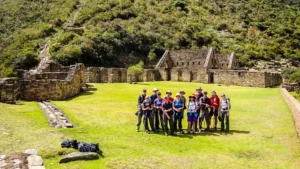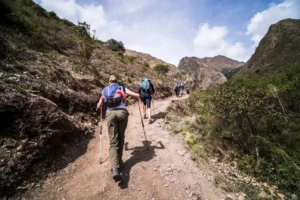

Steep stone staircase four hours straight, air thin enough that every breath counts. Dead woman’s pass, Day 2, Warmiwañusca, final boss of the journey. Most hikers underestimating what’s coming until they’re already in it.
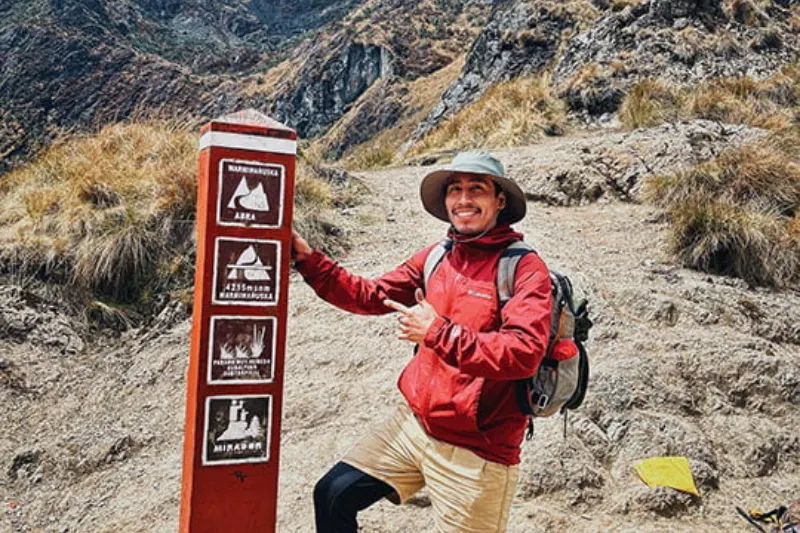
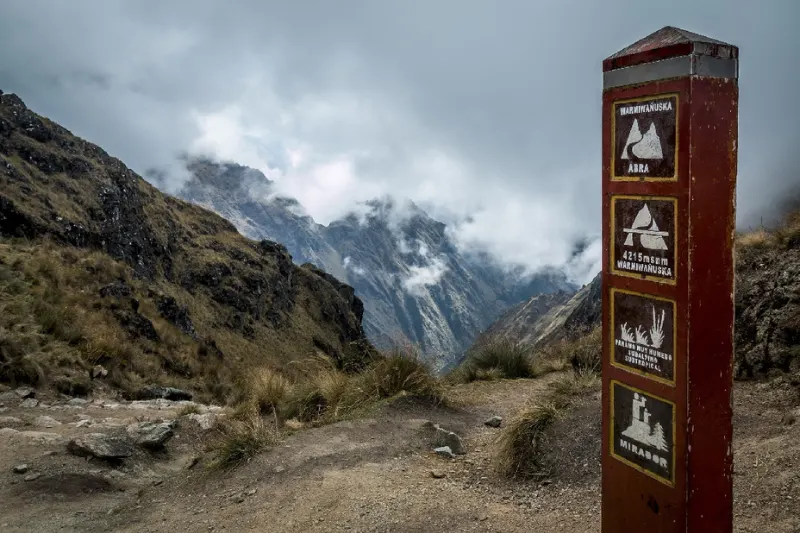
Dead woman’s pass elevation at 4,215 meters (13,828 feet), three Eiffel Towers stacked, that’s the vertical climb on the inca trail dead woman’s pass segment. Body registering the oxygen gap fast, no gradual adjustment happening up here.
Ancient engineers routing a stone road over this summit rather than around it. Exhaustion replaced instantly by triumphant views of sweeping valleys below, and that exchange is the whole point.
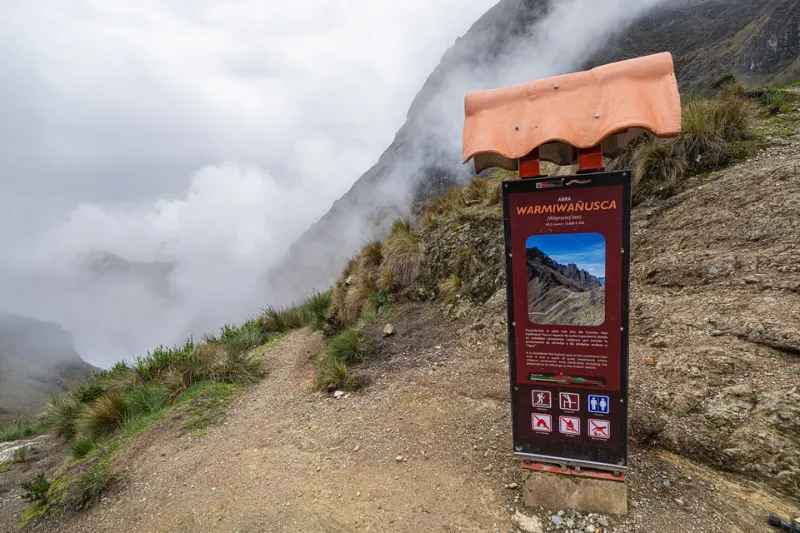
What the Name Warmiwañusca Reveals About Andean Myths
Historical tragedy behind the grim title, that’s what most people assume. Wrong completely. Dead woman’s pass peru name coming from simple geographical illusion, mountain’s crest tracing a woman lying on her back from certain valley viewpoints. Pareidolia doing the naming work, no disaster involved.
Quechua translation breaking down simply:
- Warmi (war-mee): Meaning «woman»
- Wañusca (wan-yoos-kah): Meaning «dead» or «sleeping»
Ridge’s lifeless shape honored in the name, nothing more than that. Visual mythology captivating, preparing the body for thin air reality requiring a completely different kind of focus from anyone planning to attempt this.
Navigating the Ascent Without Succumbing to Altitude
Dead woman’s pass inca trail segment requiring respect for the atmosphere just as much as the leg muscles. Sixty percent of expected oxygen arriving with each breath up here, Day 2, acclimatization barely begun. Already the hardest day of the trek, no easing into it.
Pushing too fast forcing the body across its anaerobic threshold, deep burning sensation as muscles starve. «Rest-step» technique taught by guides to manage the grueling Inca Stairs, back knee locked on each step, brief pause, deliberate breath. Rhythmic pacing keeping heart rate manageable during the ascent.
Climate impact on the inca trail shifting conditions dramatically here. Sunny morning turning instantly into a blinding sleet storm once clouds roll over the ridge. Humid cloud forests to freezing alpine winds crossed in a single ascent, clothing layers needing constant adjustment throughout.
The Engineering Secrets of the Inca Road at High Altitudes
Tiny thread in the Qhapaq Ñan, ancient highway network spanning over 24,000 miles across the Andes. Incas using strategic mountain positioning for rapid communication and military visibility, extreme topography turned into tactical advantage. Among all hikes in peru, this segment combining ancient engineering with raw physical demand unlike anything else.
Three distinct methods armoring the mountainside permanently:
- Friction-locked stone paving: Granite blocks interlocking without mortar, path flexing safely during earthquakes.
- Hydraulic drainage channels: Subterranean gutters redirecting destructive rainwater off the trail instantly.
- Adaptive stair pitch: Steps customized to the mountain’s natural gradient, steep irregular stairs exhausting hikers consistently.
Centuries of tropical storms survived by this masterful hydraulic engineering. Modern dirt roads would wash away completely under the same conditions these ancient stones handle without issue.
Essential Preparation for the Steepest Climb
Relentless stone stairs of dead woman’s pass peru demanding strategic gear before anything else. Well-broken-in hiking boots with stiff soles, roomy toe box preventing agonizing toe-smash when gravity pulls hikers down thousands of uneven steps. Getting footwear wrong immediately obvious once the descent starts.
Adjustable trekking poles non-negotiable on the inca trail dead woman’s pass segment, up to 25 percent of harsh downward impact transferred from knees into arms. What regulations should you know before visiting the inca trail matters at this stage too, strict permit limits and licensed guide requirements affecting access significantly. Rules worth knowing well before the trailhead.
Essential foods for the inca trail mattering just as much as gear choices here. Carbohydrate-dense foods like quinoa, dried fruit, nuts, and energy bars keeping muscles fueled across long climbing days. Essential checklist for the trail’s toughest day:
- Proper footwear: Roomy boots to prevent downhill toe injury.
- Trekking poles: Crucial shock-absorbers for ancient stones.
- Coca leaves: The time-tested remedy for altitude exhaustion.
Descending Into Pacaymayu: The Reward After the Peak
Conquering dead woman’s pass only half the battle on the trail’s most grueling day. Lungs catching a break but legs facing eccentric muscle loading immediately after the summit. Dropping 600 meters in a single afternoon, Empire State Building stairs twice, constant focus required protecting the knees throughout.
Barren windswept alpine landscape transforming quickly as the path drops below the stark tree line. Lush emerald embrace of the Andean cloud forest arriving, biting mountain winds softening into cool mists clinging to branches draped in bright moss and delicate orchids. Colorful hummingbirds and vibrant flora offering stunning contrast to the rocky peaks left behind.
Pacaymayu valley campsite at the bottom, communal washrooms, cold water basins, terraced tent areas all waiting. Hot tea near a rushing waterfall, exhausted muscles finally getting actual rest after everything the day demanded.
Turning Your Achievement Into a Lifelong Memory
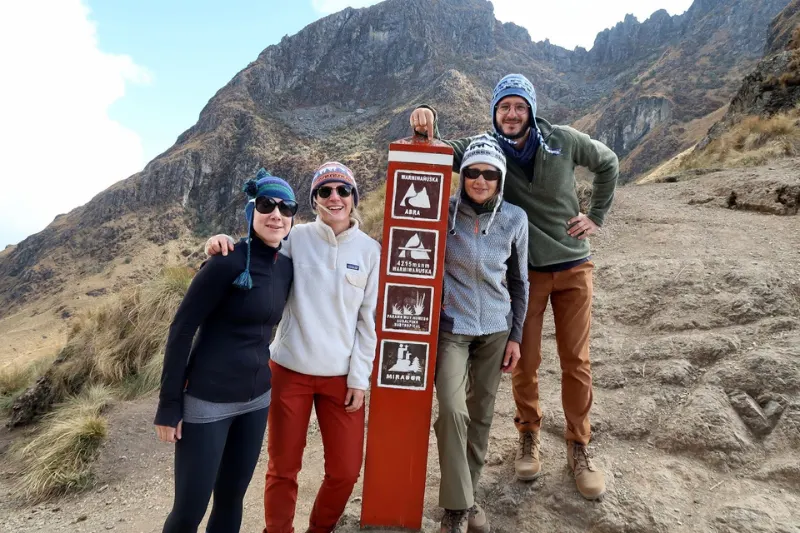
Reaching the summit of dead woman’s pass more than a physical milestone, profound rite of passage connecting directly to centuries of Inca history. Exhaustion fading the moment the peak is crested, triumphant views of the sweeping Andean valley just conquered replacing every bit of it. Something that stays with people long after the legs stop hurting.
The best season to visit Machu Picchu and attempt this route falls between May and September during the dry season. Stable trail conditions and clear summit views making the achievement feel proportional to the effort. Many trekking packages in peru bundling the classic four-day Inca Trail with Machu Picchu entry, transport from Cusco, licensed guides, and meals throughout. Three simple training steps to start at home:
- Simulate the stairs: Climb local staircases or use a stair-stepper for 30 minutes daily to condition climbing muscles.
- Build trail stamina: Long weekend hikes on rough uneven terrain strengthening joints considerably.
- Practice rhythmic breathing: Steady intentional breaths during aerobic exercise preparing lungs for thinner air.
FAQ
How high is Dead Woman’s Pass?
Dead woman’s pass elevation reaches 4,215 meters (13,828 feet) above sea level, making it the highest point on the classic Inca Trail. Vertical gain equivalent to ascending three Eiffel Towers stacked top-to-bottom.
Why is it called Dead Woman’s Pass?
Mountain ridge’s silhouette looking like a woman lying on her back when viewed from certain points on the trail. Quechua name Warmiwañusca roughly translating to «dead or sleeping woman,» no historical tragedy behind it.
How difficult is the climb to Dead Woman’s Pass?
Widely considered the hardest section of the classic inca trail dead woman’s pass route. Long steep ascent up uneven stone steps at high altitude, thinner air making even a steady pace feel genuinely strenuous throughout.
How long does it take to reach Dead Woman’s Pass on the Inca Trail?
Most hikers reaching the summit on Day 2 of the classic trek, typically after several hours of climbing from camp. Exact timing varying by fitness, acclimatization, weather, and trail conditions on that specific day.
How can I prepare for the altitude at Dead Woman’s Pass?
Arrive in the Cusco region with time to acclimatize, hike at a controlled pace using the rest-step, stay hydrated, and train in advance with stairs and long hikes. If concerned about altitude illness, talk with a clinician before the trip.